

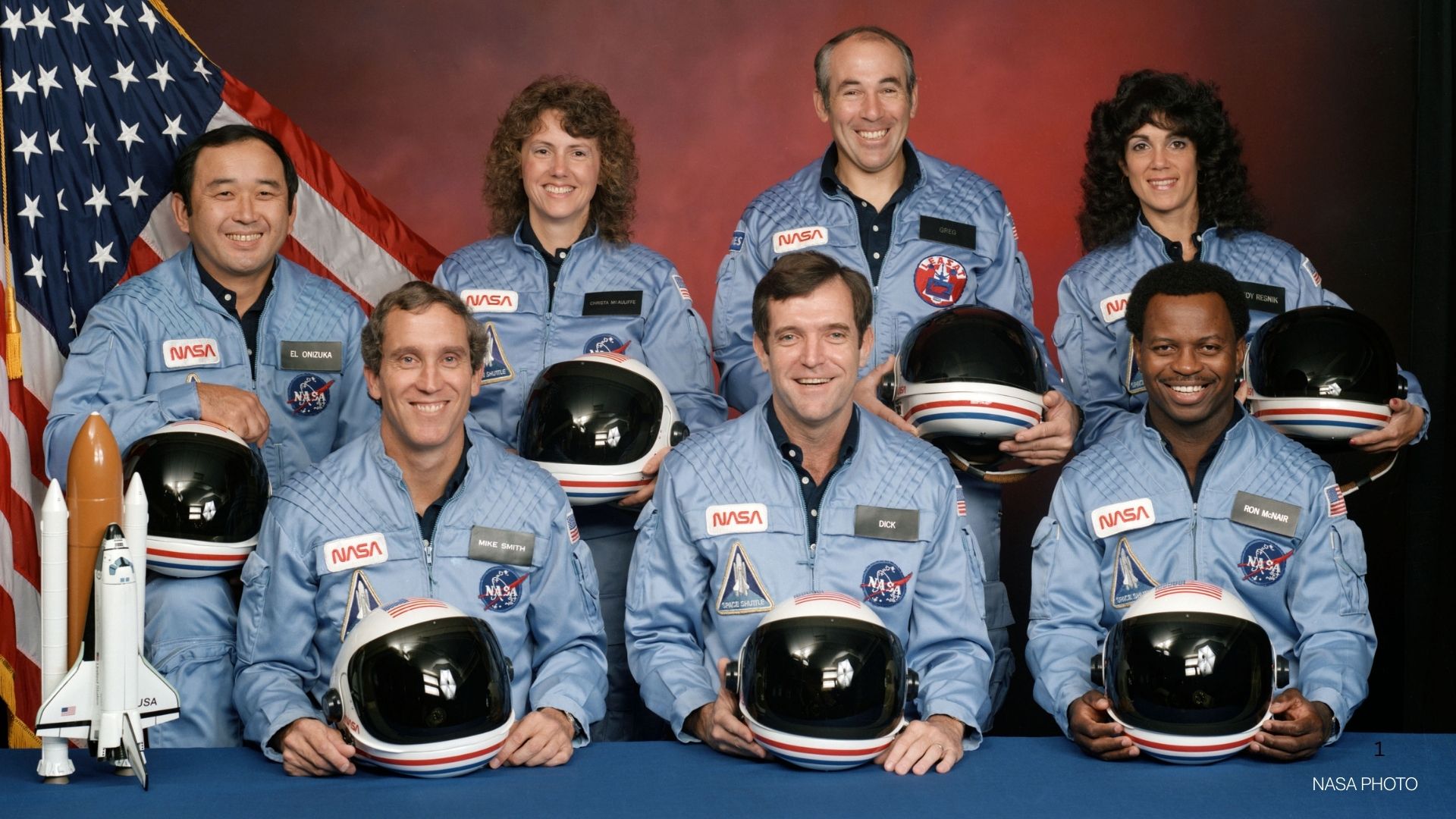
It’s hard to believe, but today, January 28, 2026, marks exactly 40 years since the Space Shuttle Challenger exploded 73 seconds after liftoff on January 28, 1986. Here in Houston, that happened at 10:39 a.m. our time, when the spacecraft was about 46,000 feet above the Atlantic off Florida’s coast. All seven crew members were lost: Commander Dick Scobee, Pilot Michael Smith, Mission Specialists Ron McNair, Ellison Onizuka, and Judy Resnik, plus Payload Specialists Gregory Jarvis and Christa McAuliffe. Christa was the first teacher selected to fly in space. She was set to teach lessons live from orbit to students across the country.
A Busy Year Cut Short
This was NASA’s 25th shuttle mission since Columbia’s debut in 1981, and 1986 looked like it would be one of the program’s busiest years, with up to 15 launches planned. Then, in those brief seconds, everything changed.
The Last Words from Mission Control
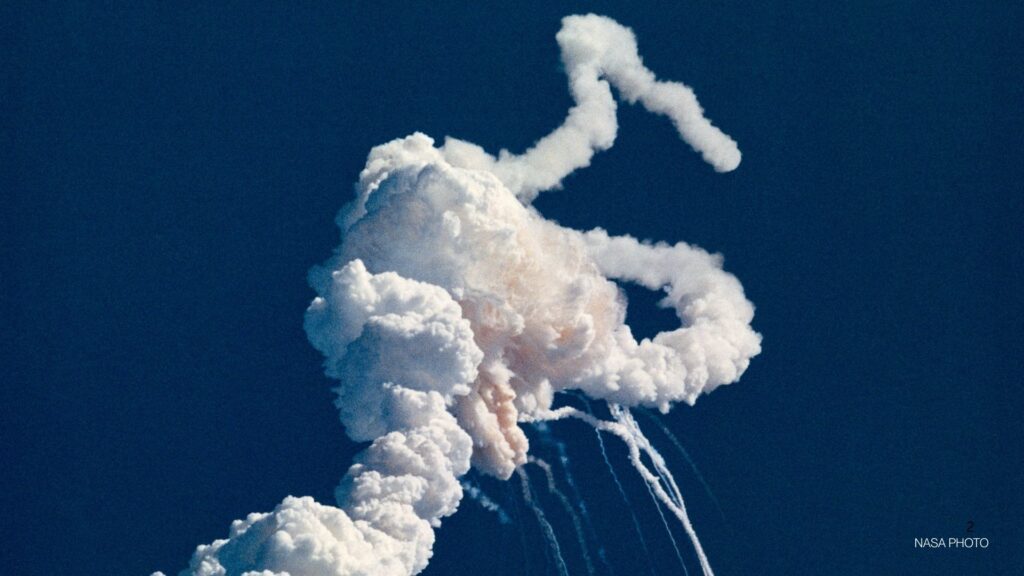
At Mission Control right here in Houston, astronaut Richard Covey was capsule communicator, commonly known as “Cap Com.” He made the routine call: “Challenger, go at throttle up.” Scobee replied, “Roger, go at throttle up.” Moments later, a massive hydrogen fireball engulfed the shuttle, with debris scattering as the solid rocket boosters veered away from the plume.
What Went Wrong
The Rogers Commission later determined the cause: failure of the O-rings in the right solid rocket booster’s field joint. Overnight freezing temperatures at Kennedy Space Center’s Launch Pad 39B had stiffened the rubber seals, preventing them from sealing properly under pressure. Hot gases leaked out, eroded the joint, and breached the external tank. The mission had faced repeated delays due to weather and technical problems, building intense pressure to launch despite engineers’ warnings about the cold.


My “Where Were You” Moment
I was eleven years old, a fifth-grader at Lamar Elementary here in Houston, a school that’s long gone now. That day became my first true “I remember exactly where I was” moment, the kind my parents described feeling during President Kennedy’s assassination when they were about my age.
My class had just returned from a bathroom break. In the hallway, I saw teachers clustered together, speaking quietly with somber expressions. I caught snippets: “shuttle” and “fire.” While washing my hands, I told a friend I thought the Space Shuttle had exploded. He looked at me like I was nuts. “What? No way, that didn’t happen.” But when we got back to Ms. Jenkins’ classroom, the TV was on, something that almost never happened during school hours. Peter Jennings was on ABC News, and that is where I saw it. The Space Shuttle Challenger had indeed exploded. It replayed repeatedly throughout the day as news crews analyzed the video. The only other time I recalled the news interrupting class was in kindergarten, when someone tried to assassinate President Reagan.
How the Day Changed
The explosion hit at 10:39 a.m. Houston time, and the rest of the day felt heavy and off-kilter. Space meant everything to me back then. I was born and raised in Houston, with Johnson Space Center as a big deal. Back then you could drive right onto the JSC campus, park, wander the exhibits, and grab lunch in the cafeteria alongside astronauts and NASA employees. This was way before the days of Space Center Houston where you pay to park and buy tickets. I had toy shuttles, planned pretend launches, typed flight schedules on our family typewriter, and belonged to the Young Astronauts program. In 1981 I remember my mom being amazed at watching Space Shuttle Columbia blast off and then glide back to land like an airplane was pure magic. She had only seen Saturn V rockets blast off in the Apollo days. Nothing else compared to the Space Shuttle. After the Challenger incident I remember wondering if the United States would ever fly shuttles again, if the dream had ended right there.
Aftermath and Recovery
NASA grounded the shuttle fleet for 32 months, redesigning the boosters, particularly the O-rings, and overhauling safety and decision-making processes. Flights resumed with Discovery’s STS-26 mission in 1988, and the program continued until 2011.
The Memorial in Our Backyard
Three days later, on January 31, 1986, a memorial service took place at Johnson Space Center. President Reagan spoke on the mall in front of the Avionics Building, addressing the families, astronauts, NASA staff, and anyone else who felt the loss so personally. It was a quiet, grieving gathering in the heart of the place that had always symbolized our city’s pride in space exploration.
Forty Years Later
Forty years on, it still feels surreal. That morning in 1986 shook something loose. I was just a kid who thought space was all adventure and triumph, but watching those plumes tear apart in the sky made it real that every launch carried lives, hopes, and real danger. It made things real. It also inspired. The story never left me, and in a way, it’s part of why I still believe in reaching higher, no matter the cost.


3 Comments
istqgydxsidkxzglmjyetqlhtyogut
How are you?
При поиске качественных ссылок часто используется база трастовых сайтов для хрумера.