


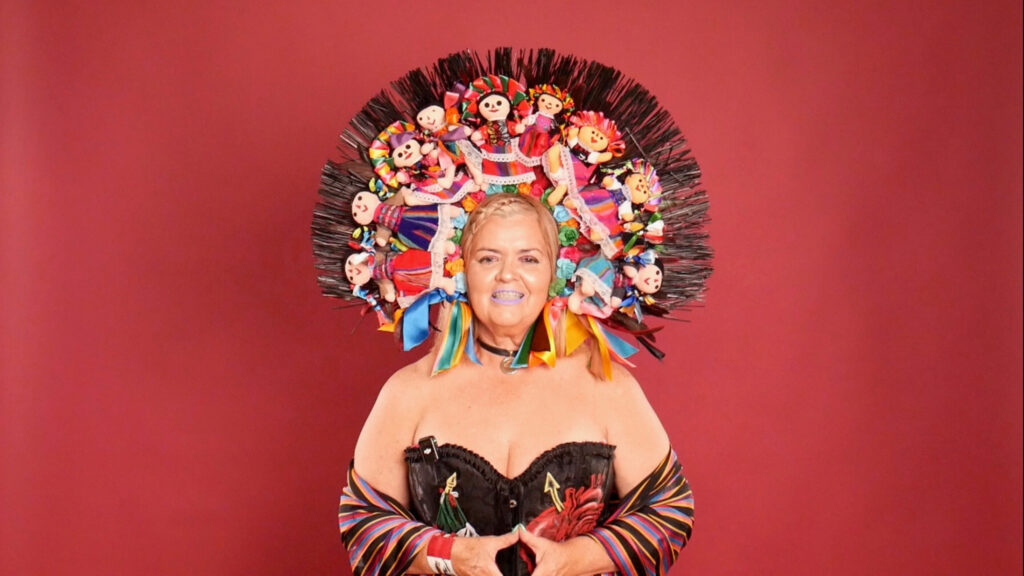
Houston designer Bockatrina shares her Mexican heritage through handmade women’s fashions created for the celebration.
A photograph, a favorite meal, a story told again. During Día de los Muertos, remembering someone can take many forms, each rooted in the relationship that continues after a loved one has died.

Observed primarily on November 1 and 2, Day of the Dead is a Mexican tradition devoted to honoring those who have passed away. Its customs bring families together to remember the lives, personalities and everyday pleasures of people they miss. Love and grief share space with food, art and celebration. Smithsonian National Museum of American History
The tradition draws on Indigenous beliefs and practices alongside Catholic observances introduced during the colonial period. UNESCO describes the celebration among Mexico’s Indigenous communities as a time marking the temporary return of deceased relatives and loved ones. Customs and timing vary across communities and families, with observances extending from late October into early November. UNESCO
The Meaning Behind the Ofrenda
One of the most recognizable expressions of Día de los Muertos is the ofrenda, an offering arranged as an altar to welcome and honor the dead.
Photographs identify the people being remembered. Favorite foods and drinks recall what they enjoyed in life. Candles offer light to guide their return, while water is traditionally placed to quench the thirst of visiting souls. Pan de muerto, a bread prepared for the season, is another familiar offering. Mexico’s Ministry of Agriculture
Cempasúchil, the marigold associated with the holiday, carries meaning beyond its vivid color. In traditional belief, its scent helps guide the departed toward the offerings prepared for them. Mexico’s Ministry of Environment and Natural Resources
Together, these details make remembrance personal. The food on an altar can recall a family table. A photograph can open a conversation about someone a younger generation never met. Families and friends may share stories around an ofrenda or gather at a cemetery to feel close to those they have lost. Smithsonian National Museum of American History
A Houston Designer’s Personal Connection
For Houston designer Bockatrina, Día de los Muertos is part of the Mexican culture she loves sharing through art and handmade design. Born in Mexico, she has called Houston home for most of her life.
Her work includes women’s fashions designed specifically for Día de los Muertos, bringing her creative practice into a celebration with deep personal meaning.
“I love sharing my Mexican culture through art and my handmade designs for Day of the Dead,” Bockatrina says.
That connection grew more profound after the loss of her father.
“This tradition became even more special to me after losing my father,” she says.
Her experience gives a personal perspective on the observance: a tradition carried through generations can take on new meaning when the person being remembered is someone central to one’s own life.
Bockatrina also speaks with pride about the city she calls home.
“I’m proud to live in a city that celebrates different cultures and comes together during hard times,” she says. “I love Houston! Houston Strong!”
Through her handmade fashions and her own story, Bockatrina shares both her heritage and the personal significance of Día de los Muertos. Her connection to the tradition begins in Mexico and continues in Houston, where art offers another way to keep that culture present.
Día de los Muertos Events Around Greater Houston
For those looking to take part in a public celebration of remembrance, these Houston-area events are scheduled for Sunday, November 1, 2026. Times are local; check organizers’ pages before heading out.
Discovery Green — 3–7 p.m.; free. The downtown park’s celebration includes a community ofrenda by Houston artist Angel Quesada, a Catrín y Catrinas parade and contest, traditional performances, live music, food and crafts. Bring a copy of a loved one’s photograph rather than an irreplaceable original. 1500 McKinney Street, Houston. Event details
Children’s Museum Houston — 9 a.m.–5 p.m. Families can explore an ofrenda, make papel picado and take part in bilingual storytelling and cultural performances. Activities are included with museum admission or membership; general admission is $21.95 online or $23.95 at the door for ages 1 and older, with infants and members admitted free. Adults must visit with a child age 12 or younger. 1500 Binz Street, Houston. Event details
Sugar Land Heritage Museum and Visitor Center — 10 a.m.–5 p.m.; free. November 1 is the final scheduled day of the 2026 Hispanic Heritage and Día de los Muertos exhibit. Local families’ altars honor ancestors who helped shape Sugar Land. 198 Kempner Street, Building B, second floor, Sugar Land. Exhibit details
Find Bockatrina on Instagram at @bockatrinaoficialmex.

