

New Report Details Two Paths Forward for the Iconic Eighth Wonder of the World
Harris County has received a study outlining two potential paths for the historic Astrodome: renovation to restore basic functionality or complete demolition. The estimates, released by the Harris County Office of County Administration, provide a financial framework for addressing the long-vacant structure at the center of NRG Park.
Renovation Option: $752,576,133 to Restore Basic Operations
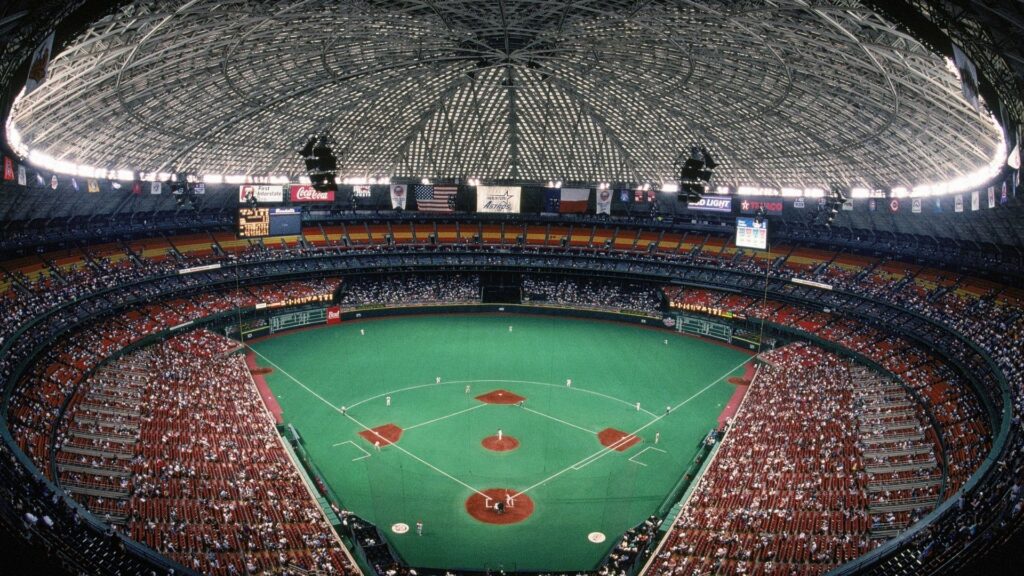
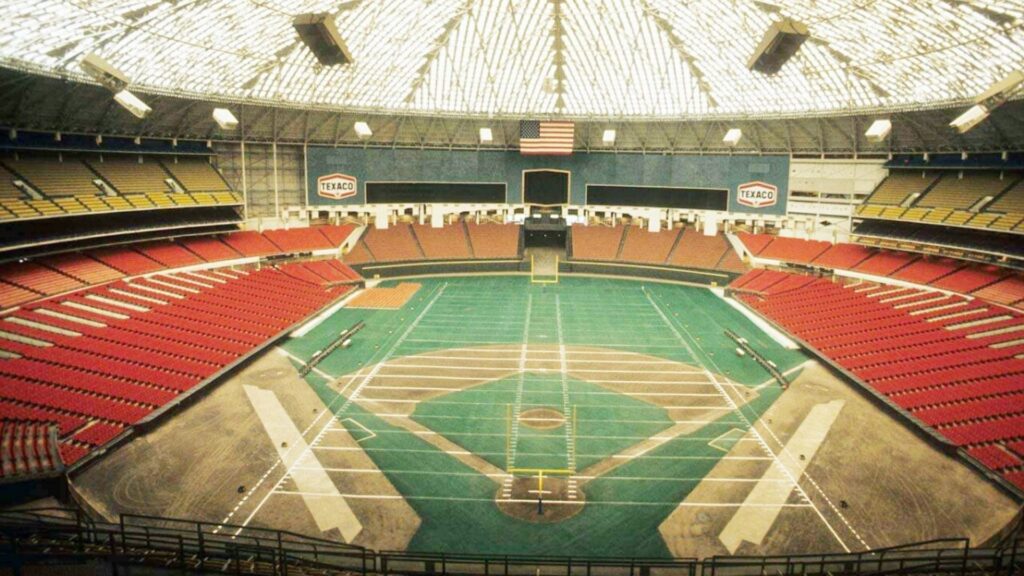
The renovation option, which would bring the Astrodome up to operational standards including updates to plumbing, HVAC systems, and other essential infrastructure, carries an estimated cost of $752,576,133. This scenario focuses on achieving safe occupancy without modern upgrades to concessions, seating, or facilities for large-scale events. Much of the original seating has already been removed, and the plan would not support professional or major collegiate sports, though it could accommodate smaller events like high school football, floor-based activities such as basketball or wrestling, or uses tied to the Houston Livestock Show and Rodeo.
Demolition Option: $54,966,318 to Remove the Structure
In contrast, demolishing the Astrodome is projected to cost $54,966,318. This process would involve a phased approach: internal demolition of main elements, implosion of the iconic dome roof over several weeks to minimize risks to surrounding buildings, and removal of perimeter and below-grade structures. The site would be cleared of debris, leaving the excavated area, originally dug over 700 feet wide and 30 feet deep, in its current state until future uses are determined. Harris County officials noted that past demolitions at the site, such as the 2013 implosion of three exterior towers added in a 1989 renovation, caused only minimal cosmetic damage to the Astrodome.
“These cost estimates illustrate that it will not be financially feasible for Harris County to renovate the Astrodome without significant private investment,” said Interim County Administrator Jesse Dickerman. The Astrodome stands as the only structure on NRG Park property eligible for substantial federal and state historic rehabilitation tax credits, potentially offsetting hundreds of millions in costs for a broader redevelopment. Advocacy groups like the Astrodome Conservancy highlight this advantage, noting that such incentives are unavailable for new construction elsewhere on the site.
History and Legacy of the Astrodome
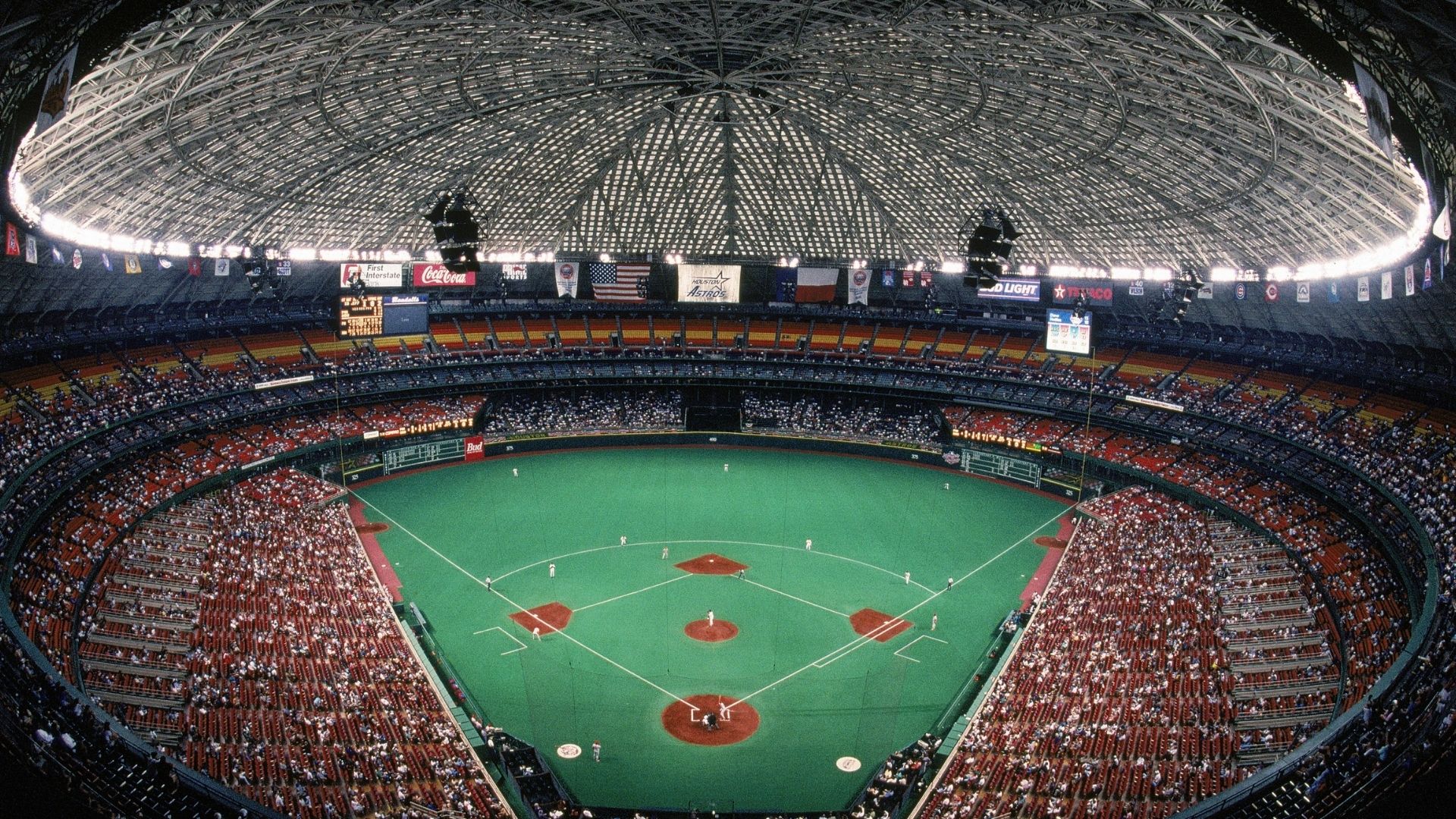
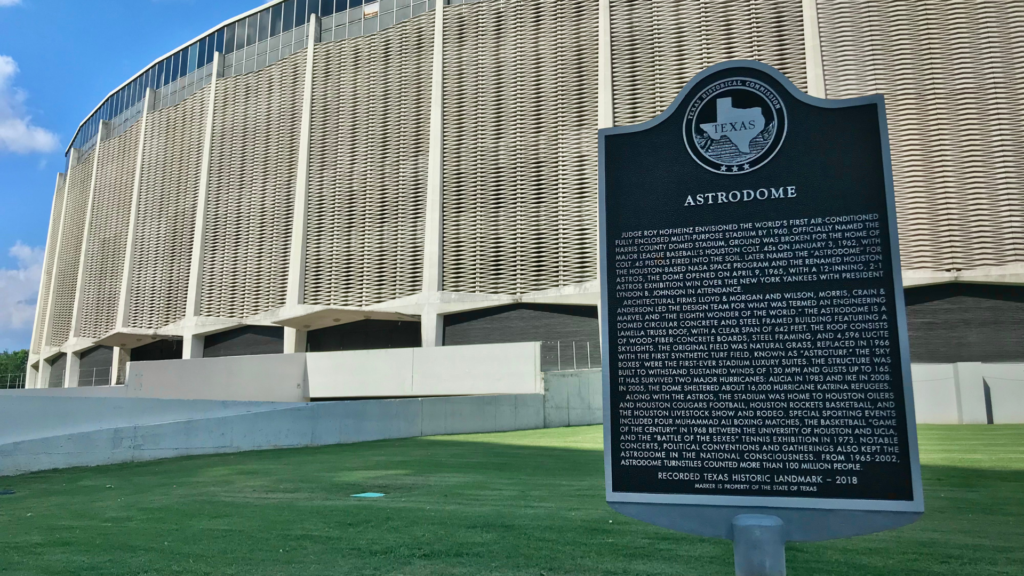
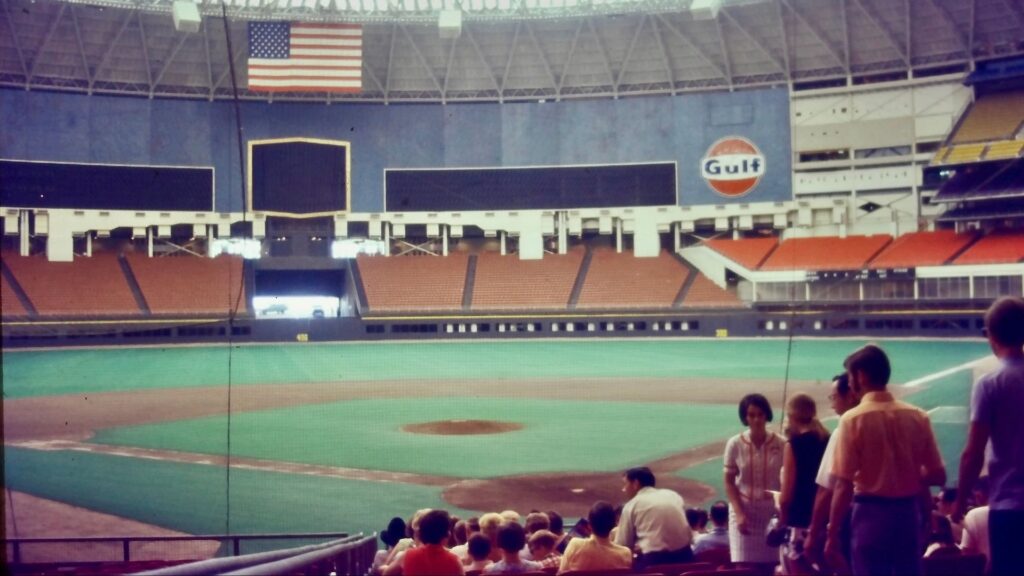
The Astrodome, opened in 1965 and dubbed the “Eighth Wonder of the World,” was the world’s first fully enclosed, climate-controlled domed stadium. It hosted a wide array of events, from Houston Astros and Oilers games to major gatherings, as well as the Houston Livestock Show and Rodeo, which expanded significantly after moving there in 1966. The structure has been fully paid off for over a decade, with all original 1960s bonds and 1980s renovation costs retired. However, it has sat largely empty since losing its certificate of occupancy in 2009, with the playing field serving primarily as storage for NRG Park.
Designated a State Antiquities Landmark in 2017, placing it alongside sites like the Texas State Capitol, the Alamo, and Dallas’s Cotton Bowl, the Astrodome requires Texas Historical Commission approval for any alterations. This status has not precluded renovations, as seen with the Cotton Bowl’s updates for ongoing use.
Past Efforts and Political Challenges
The issue remains one of Harris County’s most politicized topics. Early 2000s efforts under then-County Judge Robert Eckels involved a five-year window with the Astrodome Redevelopment Corporation to transform it into a hotel and entertainment complex, but funding fell short, partly due to exclusive rights held by the Houston Livestock Show and Rodeo and the Houston Texans under a tri-party agreement with the county. These tenants control parking and facilities during events, complicating outside developments.
In 2013, under County Judge Ed Emmett, a roughly $182 million bond proposal to convert the Astrodome into an event center failed at the polls. Voters did not approve demolition, as it was deemed illegal to include on the ballot, according to county attorneys at the time. No one voted in 2013 to tear down the Astrodome. Since then, various redevelopment ideas have surfaced, but few have fully accounted for the needs of the primary tenants or the day-to-day operations of NRG Park.
Find Bayou City Dish on HoustonCityBeat.com

Recent Proposals and Tenant Reactions
In November 2024, the Astrodome Conservancy unveiled a $1 billion redevelopment plan titled “Vision: Astrodome.” The proposal included removing much of the interior seating, adding livestock areas, improving access with new structures, and building an approximately 20,000-seat arena to replace the outdated NRG Arena (originally constructed in 1975). It also incorporated hotel, office, retail, and parking elements to form a mixed-use entertainment complex. The plan leveraged potential historic tax credits, estimated at up to $400 million or more through federal and state programs for qualified costs. The Houston Livestock Show and Rodeo and the Texans quickly dismissed it as unfeasible, though the Rodeo has previously expressed interest in a new arena for non-stadium events (with standalone replacement costs estimated at $350 million).
The Texans and Rodeo have issued no public statements on the latest county estimates. Both are in ongoing lease negotiations with Harris County ahead of their NRG Stadium agreement’s expiration in 2032. Relocation remains a possibility in the 10-county Greater Houston region, home to 7.8 million people, an option illustrated by the Dallas Cowboys playing at AT&T Stadium in Arlington rather than Dallas itself. Such a move could significantly affect NRG Park, which relies on professional football and the world’s largest rodeo. County officials, including Judge Lina Hidalgo and commissioners, have not commented on the negotiations.
Current Status and Next Steps
The people of Harris County own the Astrodome, and any decision must involve collaboration with tenants and the community. No timeline has been announced, and the estimates are presented as informational rather than prescriptive.
The release coincides with broader discussions about NRG Park’s future and offers an opportunity for dialogue among Harris County, the Harris County-Houston Sports Authority (which promotes the region as an international sports and entertainment hub), preservation organizations, and the primary tenants, who do not own the property. The Astrodome’s role in placing Houston on the global stage aligns with the Authority’s mission, especially as the city prepares for events like the 2026 FIFA World Cup matches at NRG Stadium.
Public discourse has sometimes been clouded by inaccuracies about past votes, maintenance costs, and feasibility. Moving forward, fact-based discussions could help build constructive solutions that respect the structure’s importance to residents, who own it through Harris County.
The Astrodome put Houston on the international map. It pioneered features seen in modern stadiums today, including plush seating, artificial turf, air conditioning, restaurants, executive suites, and giant electronic scoreboards. The entire game-day experience evolved from innovations introduced there in 1965. The Astrodome became a victim of its own success as single-purpose venues replaced multipurpose designs, yet its situation in Houston is unique. Comparisons to the original Yankee Stadium, demolished in 2009 partly due to New York City laws requiring parkland swaps for the new facility across the street, do not apply. No similar mandates exist in Harris County.
The Astrodome sits at the heart of NRG Park as the catalyst for its development. The Houston Livestock Show and Rodeo grew dramatically after relocating there in 1966, becoming a showcase for Western heritage and Texas history.
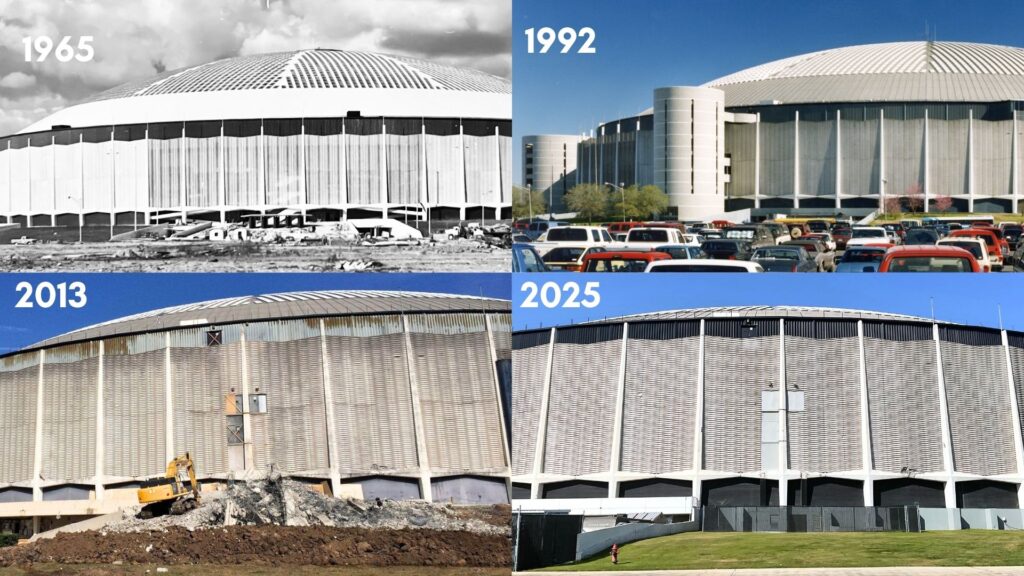
Harris County has maintained the exterior over the past decade, repainting charcoal walls and cleaning white star columns and precast concrete grill walls. Photos of the structure today closely resemble those from the 1960s, yet its closed interior leads some to label it an eyesore and call for demolition, often based on misinformation, including claims that voters approved tearing it down.
Demolition would leave a large, excavated pit prone to standing water and mosquitoes, similar to conditions at the former Colt Stadium site in the early 1960s. An underground stream beneath the facility, once nicknamed the “Catfish Hole,” requires ongoing pumping to keep the building dry.
The Astrodome could serve as a gateway to a modernized NRG Park with multi-use developments. As a symbol of Texan bravado and Western heritage, stronger and more over-engineered than NRG Stadium itself, the Astrodome reflects Houston’s can-do spirit. Paris once considered demolishing the Eiffel Tower after the 1889 World’s Fair, when critics called it an eyesore; today it defines the city. These figures support due diligence for a highly politicized landmark tied to Houston’s identity and growth. Harris County residents own the Astrodome. The path forward demands careful consideration of costs, partnerships, and its enduring community role.


1 Comment
This is a comment about Dave Ward. I am glad he now has his own street named for him across from the studio.
On another note, however, this is also about the Astrodome. It must be saved, and NRG destroyed. We all know we can not have 2 arenas. One must remain. Now. If you ask me 2 options strike me: 1. Turn it into a museum for merely sporting events, such as the HFD has.
2. Demolish NRG.