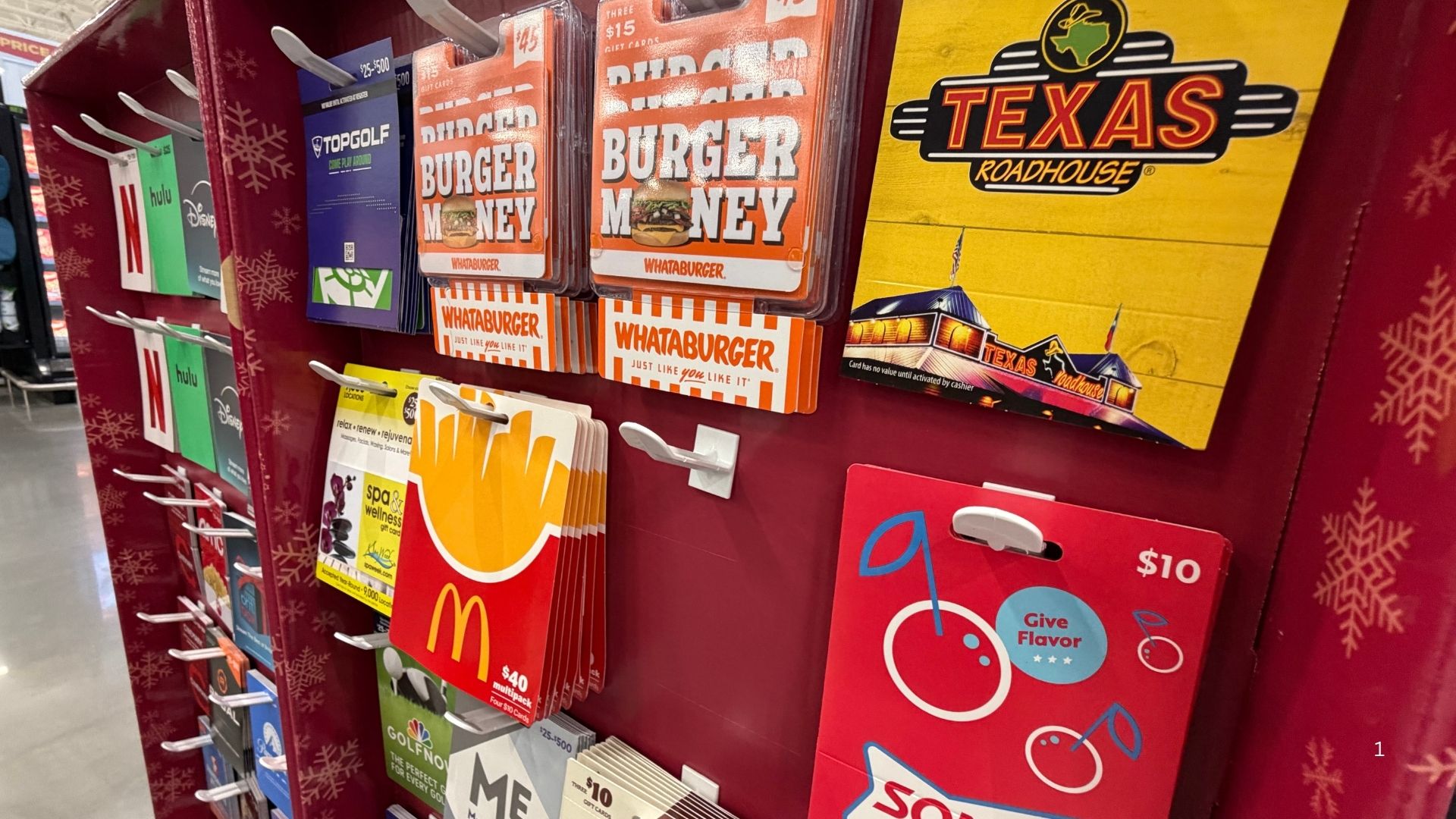
As the holiday season reaches its peak, Houstonians are flooding retailers from the Galleria to the Heights to pick up last-minute gifts. While gift cards remain a convenient choice, a sophisticated physical scam quietly drains bank accounts before the cards even leave the store. Local law enforcement and the Better Business Bureau (BBB) of Greater Houston are sounding the alarm on “gift card draining.” This crime has evolved from digital phishing into a hands-on, high-tech operation involving physical tampering.
The Mechanics of the Theft
Thieves do not need complex hacking software to execute this fraud. Instead, they rely on basic deception and high-traffic retail environments. The process follows a specific, calculated sequence.
First, scammers enter high-traffic Houston retailers and remove stacks of un-activated gift cards from the display racks. They take these cards to a secondary location where they have time to manipulate the packaging. Using high-quality printers, they create adhesive stickers with barcodes linked to accounts they already control. They carefully place these fake stickers over the legitimate barcodes on the back of the gift cards.
Once they finish the modifications, the scammers return to the store and place the tampered cards back onto the shelves. To an unsuspecting shopper, the card looks perfectly normal. The danger peaks at the checkout counter. When you take that card to the register, the cashier unwittingly scans the fake barcode. You pay the $50 or $100, but because the scanned barcode belongs to the scammer, the store system loads those funds onto the thief’s account. This leaves your physical card with a balance of zero. By the time your friend or family member tries to use the gift, the money has vanished.
Why Scammers Target the Houston Metro
Houston offers a prime hunting ground for organized retail crime rings. Our city’s massive retail footprint, encompassing thousands of big-box stores and shopping centers, provides these criminals with endless opportunities. Earlier this year, the Texas Financial Crimes Intelligence Center assisted in several arrests involving “cloning” operations that targeted the Gulf Coast region. These rings hit dozens of stores in a single day, swapping hundreds of barcodes before a single manager notices the discrepancy.
Criminals prefer Houston because of the sheer volume of transactions. In a busy store during the December rush, cashiers move through lines as quickly as possible. They rarely have the time to inspect every individual card for a sticker or a slightly raised edge. Scammers exploit this speed, knowing that the “human element” is the weakest link in the retail chain.
Texas Fights Back: New Laws for 2025
Texas lawmakers recognized the growing threat of retail fraud and took action this year. As of September 1, 2025, Texas Penal Code §32.56 went into effect to specifically target this crime.
This law changes the legal landscape for Houston prosecutors. Previously, law enforcement struggled to charge individuals who simply possessed tampered cards but hadn’t used them yet. Now, the mere possession of a tampered gift card with the intent to defraud constitutes a felony. If the Houston Police Department catches a scammer with more than 50 compromised cards, that individual faces a first-degree felony charge. This carries a potential sentence of up to life in prison. This law gives the Harris County District Attorney’s office the teeth they need to dismantle organized rings rather than just chasing low-level “runners.”
Active Steps to Protect Your Holiday Budget
You do not have to abandon gift cards entirely, but you must change your shopping habits. Proactive consumers can stop these thieves by adopting a few simple habits.
Buy From the Source Whenever possible, purchase gift cards that the store keeps behind the customer service counter or inside a locked glass case. Scammers target open racks because those displays allow them easy, unmonitored access to the inventory. If you must buy from a rack, choose a card from the middle or the back of the stack, as scammers often “seed” the front-facing cards for a quicker turnaround.
Perform the “Feel Test” Before you head to the checkout, run your thumb over the barcode on the back of the card. Manufacturers print legitimate barcodes directly onto the card or the protective packaging. If you feel a raised edge, a thick sticker, or a double layer of paper, put the card back. Immediately notify a store manager so they can pull the entire rack for inspection.
Inspect the Packaging Every Time Look for wrinkles, excess glue, or signs that someone peeled back the cardboard and resealed it. Sophisticated scammers use heat guns to open plastic packaging without tearing it. If the package looks slightly “off” or feels sticky, assume someone has tampered with it.
Verify the Transaction at the Register When the cashier completes the transaction, ask them to verify the card. Look at your receipt and compare the last four digits of the card number listed there with the digits on the physical card in your hand. If those numbers do not match, the cashier scanned a fake barcode. Stop the transaction immediately and ask for a manager.
Register Your Card Instantly Many major retailers like Target, Starbucks, and Amazon allow you to register a card through their official mobile apps. Do this the moment you get to your car. Registering the card links it to your identity and allows you to track the balance. If you notice the funds disappear minutes after purchase, you can freeze the account and report the theft to the corporate office much faster.
What to Do If You Become a Victim
If you discover a drained card, act immediately. While recovering these funds is difficult, a fast response increases your chances of a refund.
Contact the Retailer: Call the customer service number on the back of the card right away. Some Houston retailers have established “scam protocols” and can occasionally track where the scammer spent the funds.
Preserve the Evidence: Keep your paper receipt. This document serves as your only proof of the transaction. Take a clear photo of the receipt and the back of the card.
File a Local Police Report: Contact the Houston Police Department’s Financial Crimes Unit at (713) 308-2500. Most credit card companies and corporate offices require a formal police report number before they will investigate a fraud claim.
Report to the FTC: Visit ReportFraud.ftc.gov to log your experience. This helps federal authorities track trends and identify the crime rings operating in Southeast Texas.
Awareness remains your best defense. Before you grab that last-minute gift, take ten seconds to inspect the back of the card. Those few seconds could save your holiday budget and prevent a scammer from stealing your hard-earned money.