


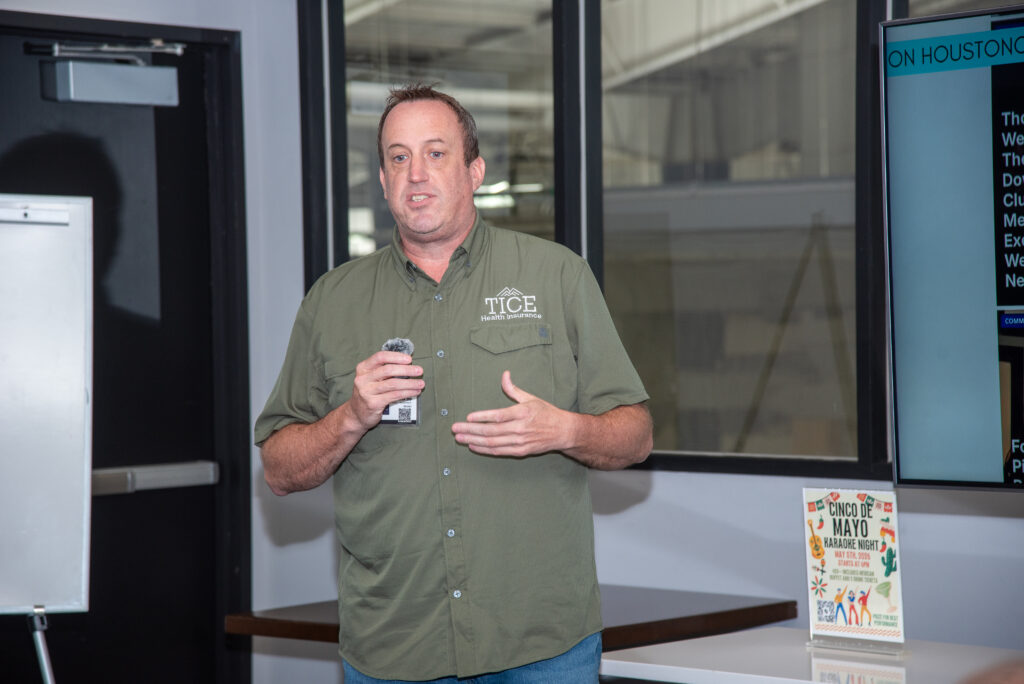
A Conversation With Derek Tice About Weight Loss, Health, and Life After 40
There are a few questions I generally avoid asking. One of them is whether they’re expecting a baby. The other is whether they’re on a diet.
Both questions have the potential to make a conversation awkward very quickly, which is why I usually steer clear of them altogether.
But when I saw Derek Tice at a recent Houston City Beat mixer, I found myself making an exception.
Derek and I have known each other for some time through the Houston business community. As we talked that evening, I couldn’t help but notice that something had changed. He looked healthier and had noticeably more energy It wasn’t just that he had lost weight. There was a confidence about him that caught my attention.
After a few minutes of conversation, curiosity finally got the best of me.
“Derek, what are you doing?” I asked.
His answer was simple.
Intermittent fasting.
Over the next several weeks, I found myself thinking about our conversation more than I expected. Like many people, I have my own ongoing battle with sugar, healthy habits, and the challenge of maintaining a lifestyle that supports long-term health. Inspired by Derek’s success, I even attempted intermittent fasting myself.
The first day didn’t go particularly well.
The second day wasn’t much better.
By the third attempt, I realized I was approaching the whole thing from the wrong perspective. Rather than trying to explain what Derek had done, I thought it would be far more valuable to invite him to share his story directly with the Houston City Beat audience.
What followed was a conversation that went far beyond weight loss. We talked about health, discipline, aging, family, insurance, and the realities many people face as they reach a point in life where they begin thinking differently about their future.
For Derek, the journey began shortly after Thanksgiving when a trip to the doctor delivered a wake-up call.
He had been experiencing digestive issues and decided it was time to get checked out. While the situation ultimately turned out to be manageable, the visit revealed several concerns that were becoming increasingly difficult to ignore. His blood pressure was elevated, and when he stepped on the scale, he was surprised by what he saw.
The number read 253 pounds.
For some people, a number on a scale is just a number. For others, it becomes a moment of reflection.
Derek told me that at 47 years old, with a teenage daughter and a career focused on helping people make decisions about their health and financial future, he had reached a point where he knew he needed to make some changes of his own.
As a health insurance advisor, he spends much of his day discussing health-related issues with clients. He regularly sees how medical conditions can affect everything from insurance premiums to life expectancy. Looking back, he admits that he felt a growing disconnect between the advice he was giving others and the habits he was practicing himself.
Instead of searching for another complicated diet plan, Derek decided to try something different. One of the agents on his team had been practicing intermittent fasting for years and had experienced tremendous success with it. After hearing about it repeatedly, Derek decided it was time to see whether it could work for him as well.
His approach was remarkably straightforward.
Most weekdays, he eats one substantial meal, typically around lunchtime. Contrary to what some people might assume, that meal is not a small portion designed to leave him hungry. In fact, he laughs about the size of some of the lunches he consumes.
Whether it’s Mexican food, seafood, Italian food, or a large plate from a local cafeteria, he allows himself to enjoy a satisfying meal while avoiding the constant cycle of eating throughout the day.
What changed most dramatically was not necessarily the quantity of food he ate during that meal, but the habits that surrounded it.
The fast food disappeared.
The late-night snacking disappeared.
The sweets, desserts, and sugary drinks that had quietly become part of his routine became far less frequent.
Perhaps most surprisingly, the cravings themselves began to fade.
Like many people who grew up with candy jars, sweet tea, desserts, and snacks always within reach, Derek had developed a lifelong sweet tooth. Breaking those habits wasn’t easy. In fact, he recalls that the first few days after Christmas were some of the most difficult.
Yet something interesting happened as the days turned into weeks. His body adjusted. The hunger became more manageable. The cravings became less frequent. What initially felt impossible gradually became routine.
Today, Derek says one of the most surprising aspects of the experience is how little food occupies his thoughts compared to before. He can attend social dinners, spend time with family, or sit with friends at a restaurant without feeling compelled to eat simply because everyone else is eating.
The results have been significant.
Since beginning intermittent fasting, Derek has lost approximately 35 pounds, bringing his weight from 253 pounds to around 218 pounds. More importantly, he has maintained those results, something he admits has been difficult to accomplish with previous weight-loss efforts.
When he returned for a follow-up medical appointment, the transformation was noticeable enough that healthcare providers immediately assumed he must have been taking one of the increasingly popular GLP-1 medications.
That conversation naturally led us into another topic Derek knows well: the growing popularity of GLP-1 medications and their impact on the insurance industry.
As someone who works daily with health and life insurance products, Derek explained that insurance carriers are still evaluating how these medications fit into long-term underwriting decisions. While he is careful not to offer medical advice, he does see firsthand how emerging treatments can influence insurance approvals, pricing structures, and risk assessments as companies gather more long-term data.
The discussion served as a reminder that health decisions often affect more than just our physical well-being. They can also influence financial planning, insurance options, and future opportunities in ways many consumers never consider.
That perspective is one reason so many of Derek’s clients seek his guidance.
During our conversation, he shared the story of a South Texas family whose health insurance premiums had become increasingly difficult to manage through a group policy. After reviewing their situation and exploring alternative options, he was able to help them secure coverage that better fit their needs while saving approximately $528 per month.
Stories like that are ultimately what drive his work.
The insurance industry is complex, confusing, and constantly changing. For many Texans, especially self-employed business owners and entrepreneurs, understanding their options can feel overwhelming. Derek sees his role as helping people navigate those decisions and identify solutions that make sense for their individual circumstances.
As our conversation came to a close, I found myself reflecting on the question that started it all.
What are you doing?
The answer turned out to be far less complicated than I expected.
There was no secret formula, miracle product, or overnight transformation.
Instead, there was consistency, discipline, and a willingness to make small decisions day after day until those decisions produced meaningful results.
Whether intermittent fasting is the right choice for everyone is a conversation best had with a healthcare professional. However, Derek’s story offers a reminder that significant change often begins with a single decision to do something differently.
Sometimes the most powerful transformations are not the result of dramatic actions. Sometimes they come from making a commitment, sticking with it, and allowing time to do the rest.

