
Sometimes the biggest ideas begin with something as ordinary as breakfast.
For a group of seventh grade students at Adams Junior High in Katy Independent School District, a container of expired cream cheese became the spark for a community-wide mission to fight food waste and rethink the way families understand expiration dates.
Now, the student-led team known as the “Galaxy Girls” is preparing to take their project, Food Waste Starts With the Date, to Destination Imagination Global Finals in Kansas City after earning first place at both regional and state competitions.
But for the team, the project has become much bigger than a competition.
“We realized this is a real issue that many families face,” the students shared in information provided to Houston City Beat. “We wanted our project to go beyond the competition and actually help our community make small changes that can reduce food waste.”
A Simple Question About Expiration Dates
The idea first emerged while one team member was preparing breakfast.
“She looked at the expiration date on the cream cheese, and it had already expired,” one of the students explained during the interview. “But then her mom told her it was actually fine, and she used her senses. It smelled, tasted, and looked good.”
That small moment quickly led to a much larger conversation.
The students began researching how confusion surrounding food date labels contributes to unnecessary household food waste. What they discovered surprised them.
According to the team’s research, most food expiration labels are not federally regulated safety deadlines. In fact, they explained during the interview that baby formula is one of the only products with federally regulated expiration requirements.
For many other foods, labels such as “best by” or “sell by” are often indicators of peak quality rather than strict safety cutoffs.
And that brought the students back to something many grandparents already knew.
“Look, smell, and feel,” the students said repeatedly throughout the interview while discussing how earlier generations evaluated food before modern expiration labeling became widespread.
Turning Awareness Into Action
Rather than stopping at research, the Galaxy Girls turned their project into a community initiative.
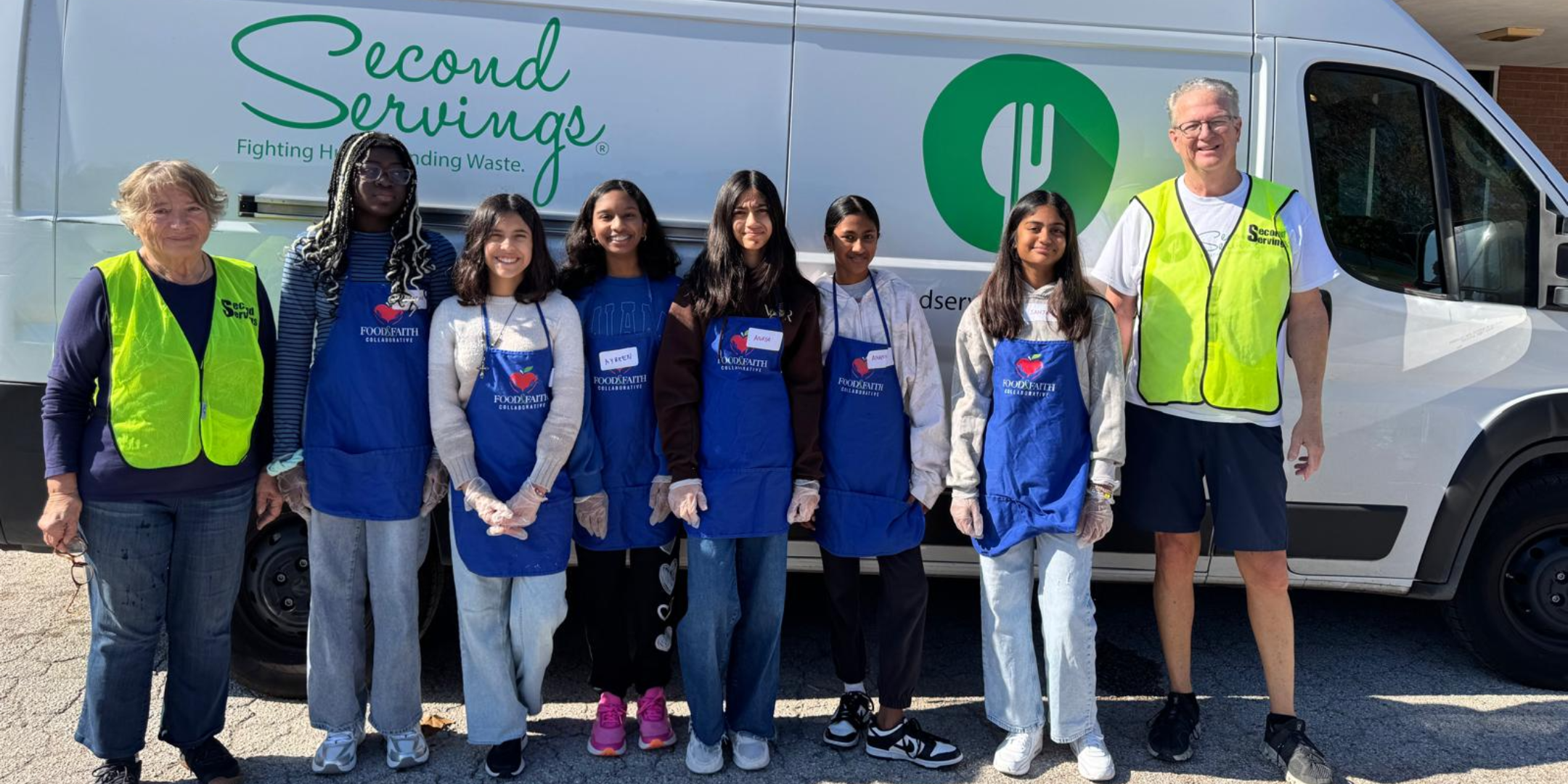
The team volunteered more than 60 hours with Second Servings of Houston, an organization that rescues surplus food that would otherwise end up in landfills and redirects it to families in need.
The students also:
- Created a food waste awareness podcast with Youth for Global Health
- Shared educational content on YouTube and Spotify
- Hosted a community awareness campaign at the Fulshear Branch Library with more than 50 participants
- Conducted surveys and outreach campaigns throughout the community
Each student took on a specialized leadership role within the project, including outreach coordination, data analysis, research, and campaign management.
“We clicked together pretty fast because we had already been friends,” one student explained while describing how the team collaborated throughout the process.
The Bigger Problem Behind Food Waste
As the students continued researching, they discovered that food waste creates environmental problems far beyond individual households.
The team shared during the interview that food waste makes up an estimated 30 to 40 percent of landfill material by weight in the United States.
When food decomposes inside landfills, it produces methane gas, a major greenhouse gas linked to climate change. The students even referenced long-burning landfill fires fueled by methane buildup as part of their research into environmental impacts.
Their goal is not to encourage unsafe food practices. Instead, they hope families will learn to better distinguish between food that is genuinely spoiled and food that is still safe to consume.
For example:
- Moldy bread should absolutely be thrown away
- Stale bread can still be toasted or repurposed into croutons
- Milk is often discarded unnecessarily despite still being safe to drink
The students say the biggest lesson they hope people take away is simple:
“Use your senses before throwing good food away.”
Building a Movement Beyond the Competition
Although Global Finals are next on the calendar, the Galaxy Girls say they are already thinking about what comes after the competition.
The students hope to continue expanding their outreach campaigns, growing awareness efforts, and encouraging more communities to rethink food waste habits.
They also hinted that future educational programs or larger awareness initiatives may still be ahead.
For now, however, the team is focused on carrying a simple message from Katy to the global stage:
“Reduce food waste. It starts with you.”
