
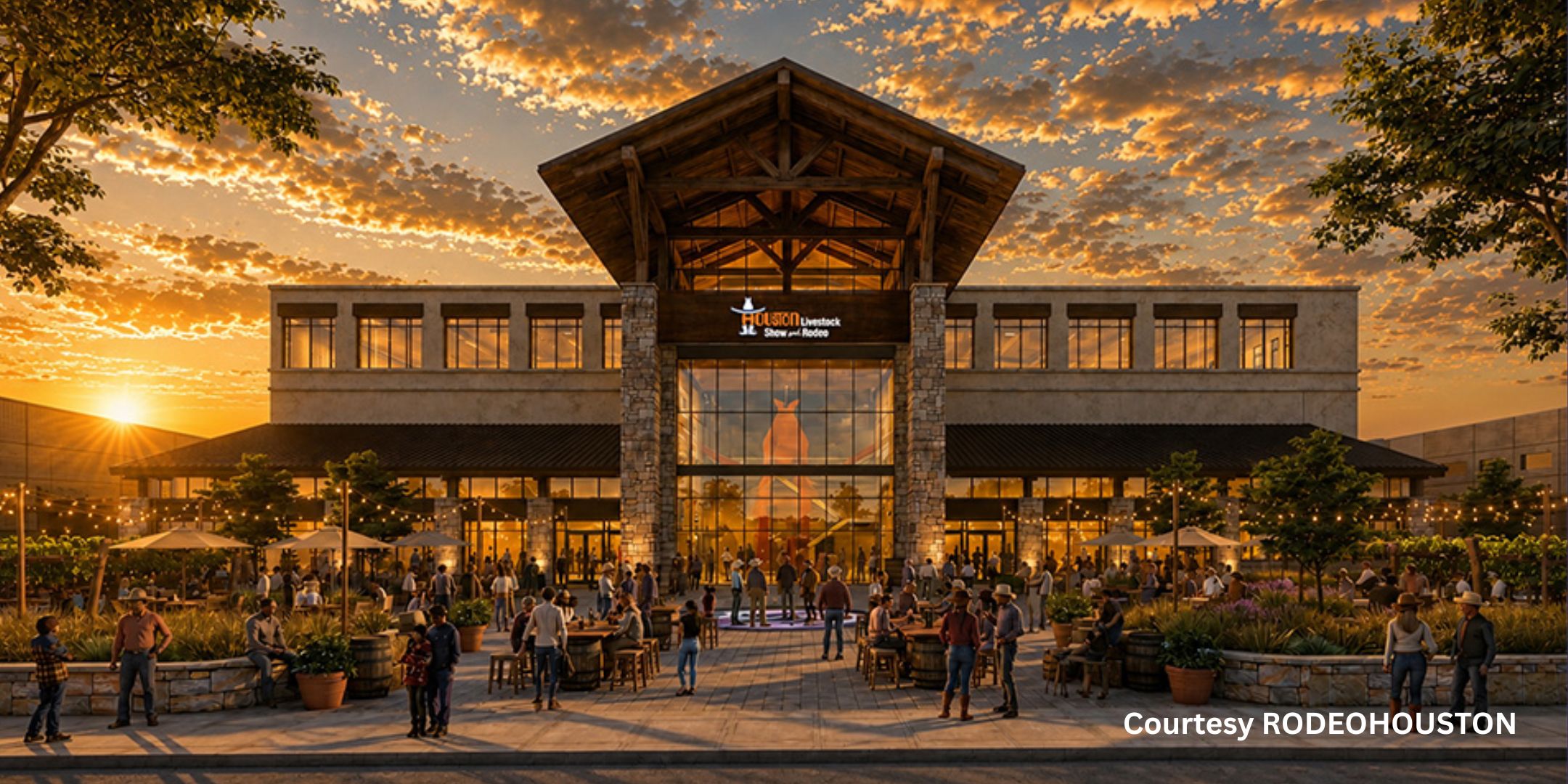
It’s official: between the Houston Texans shifting facilities to Cypress and the Rodeo constructing a massive secondary footprint, the daily operational gravity of Houston’s two largest sports and entertainment institutions is moving away from NRG Park.
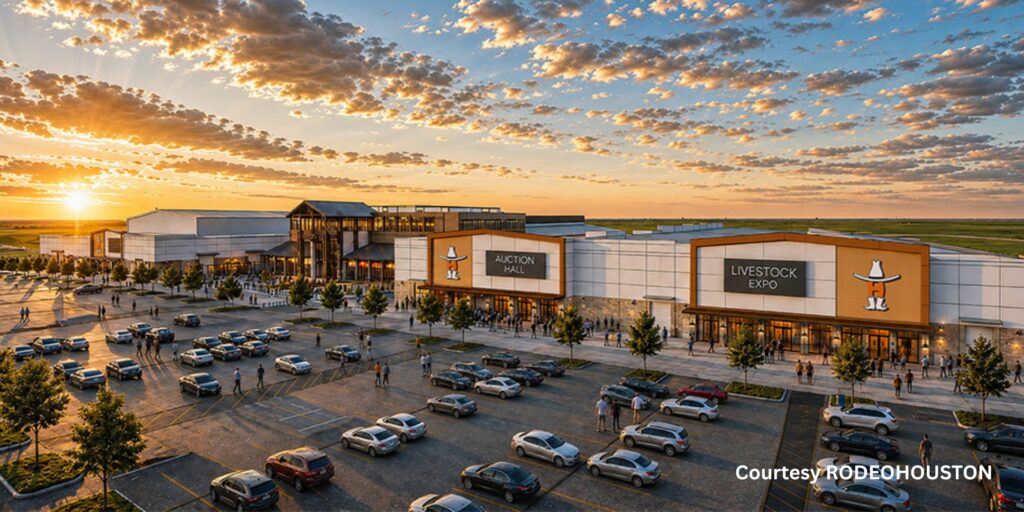
The Houston Livestock Show and Rodeo has officially made the largest facilities investment in its 90-plus-year history, announcing a transformational, $300 million livestock and agricultural complex slated to break ground in late 2026. The expansive multiyear project will sit on 100 acres of Rodeo-owned property near State Highway 288 and West Airport Boulevard, roughly three to five miles from its central park. The facility is designed to host horse show competitions, breeding shows, and year-round educational programming by the 2029 season.
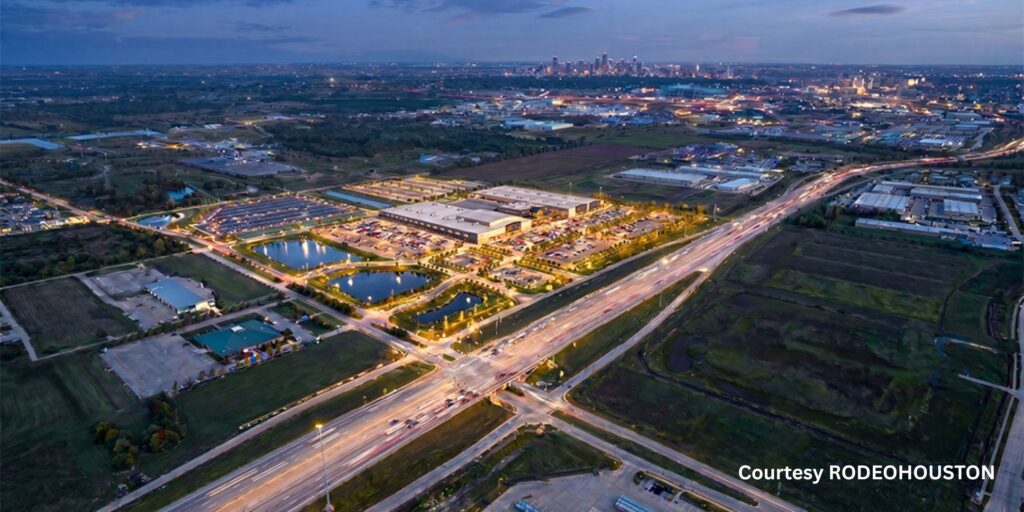

“For nearly a century, this organization has existed to support the students, exhibitors, and families who make this event possible,” said Chris Boleman, president and CEO of the Houston Livestock Show and Rodeo, regarding the historic scope of the project. “This represents the largest investment in Rodeo history and a profound commitment to the future of our mission. It’s about honoring the trust families place in us when they bring their animals, their students, and their dreams to this show. We are investing in a facility that reflects the importance of that responsibility.”
While the Rodeo explicitly notes that “the Houston Livestock Show and Rodeo will remain at Reliant Park,” the move signals a far deeper structural shift in Houston’s sports and entertainment landscape. By establishing a permanent year-round operational campus along Highway 288, the Rodeo is sending a clear message: it is no longer satisfied with keeping its entire functional identity bound to NRG Park. Instead, they appear to be shifting toward maintaining a presence at the county complex purely as an event-only tenant.
This strategy mirrors a path already forged by their stadium-mates, the Houston Texans. The Texans previously announced a massive relocation of their corporate and training headquarters out of NRG Park and into the developing Toro District in the Bridgeland area of Cypress. Much like the Texans, who will soon only utilize the stadium on game days, the Rodeo is building a year-round home independent of the county’s real estate constraints.
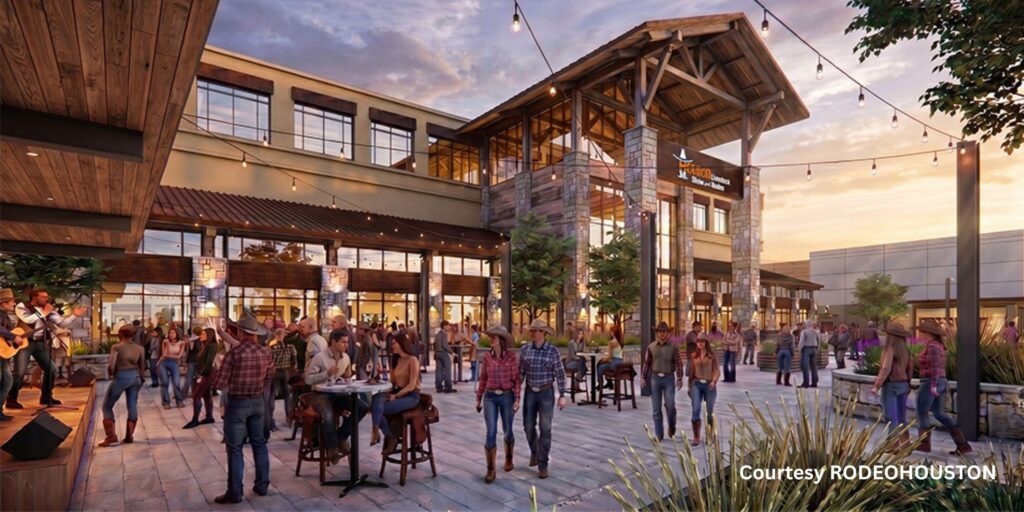
Furthermore, this development reshapes how we view the Rodeo itself. With this new announcement, a significant portion of the Rodeo’s daily events, specifically horse competitions and breeding shows, are shifting entirely away from the central complex. According to Rodeo leadership, the move became necessary because the facility where they currently host many of these events “has reached the end of its useful life”. This raises a new logistical question for the future: will the Rodeo become a two-site event, forcing fans, exhibitors, and volunteers to split their time between the heart of the city and the new Highway 288 location? To combat this, the organization has already noted that its transportation committee will operate shuttles for participants traveling between the new facility and the main park.
Houston Mayor John Whitmire highly praised the decision, highlighting that it reinforces the city’s leadership role without costing the public a dime. “This investment is another strong example of Houston standing as a premier destination for agriculture, education, and world-class events,” Whitmire said in a statement. “It expands educational opportunities for young people, strengthens our city’s reputation, and does so without placing any burden on taxpayers.”
Adding a regional county perspective, Harris County Commissioner Rodney Ellis also lauded the move as a major generational milestone. “This new agricultural complex along Highway 288 will enhance Houston’s position as a leader in agriculture and education while creating year-round opportunities for the families and young people of Harris County,” Ellis explained. “A facility of this scale will expand access to opportunities that change lives. It’s a bold step forward, and one our community can be proud of.”
This dual exodus of day-to-day operations leads to an unavoidable question about the future of the stadium itself. The tenant leases for both the Texans and the Rodeo at NRG Stadium run out in 2032, which is the exact year of the Rodeo’s centennial. With less than six years remaining on those contracts, the clock is ticking for Harris County.
Rather than angling for a completely new venue, both the Houston Texans and the Rodeo seem to be focusing their long-term interests on a massive, comprehensive renovation of the current stadium, which is slated to revert to its historic “Reliant Stadium” moniker following the expiration of current naming rights. A major driving block behind choosing a renovation over building a brand-new stadium is financial reality. The Harris County-Houston Sports Authority, which financed the original development, still owes approximately $1 billion on the sports complex venue district bonds, with a full payoff timeline extended out as far as 2056. Taking on the astronomical cost of an entirely new stadium while carrying that level of outstanding legacy debt presents a massive hurdle for local government and taxpayers.
As both organizations construct state-of-the-art homes outside the loop for their daily business, a critical long-term question emerges: is building new homes for operations outside of NRG Park a good enough long-term solution for the Texans and the Rodeo, or will an aging stadium eventually force a deeper divide?
Amidst these grand expansions, one structural monument naturally enters our thoughts: the Houston Astrodome.
The Astrodome stands as an essential foundation of how Houston transformed into a major global city. As a masterpiece of engineering and architectural innovation, it permanently altered the trajectory of sports and entertainment worldwide, laying the direct blueprint for every modern stadium built today. Beyond its universal cultural footprint, the Dome broke the boundaries of climate limitations, providing the protected space that opened the door for the Rodeo to scale up and evolve into the massive, world-renowned organization it is today.
Yet, the Rodeo and the Texans have historically shown a distinct lack of appetite for incorporating the Astrodome into their modern facility plans. Over the years, both tenants have prioritized directing county funds to serve the current stadium and championed building a brand-new county arena for the rodeo, a project that never came to fruition. This hesitation has long been a sticking point in local government, effectively turning the story of the world’s first domed stadium into one of institutional neglect rather than proactive problem-solving. Because the Astrodome holds a protected designation as a State Antiquities Landmark, it cannot be altered or demolished without explicit consent from the Texas Historical Commission.
This stalemate has long been shared by municipal leadership, including Mayor Whitmire himself. During his long tenure in the Texas Senate, Whitmire was heavily critical of using public funds for the dome. In 2017, he authored the “Harris County Taxpayer Protection Act” (Senate Bill 884) to block a county-backed $105 million renovation plan, arguing that with pressing city crises like infrastructure, flooding, and public safety, taxpayers deserved a final referendum. At the time, Whitmire explicitly noted, “The taxpayers have spoken… we have high priorities that we need to address, and there doesn’t seem to be a clear plan of what’s going to happen anyway”.
However, the fact that the Texans will soon own their own mixed-use corporate facility and the Rodeo is building its own extensive agricultural complex might actually open a long-awaited door. With both anchor tenants offloading their year-round operational demands to independent properties, Harris County may finally have the creative and political freedom to solve the decades-long issue that was allowed to grow with the Astrodome.
A newly unlocked path could see the county step up to adaptively reuse a renovated Astrodome as a premier, flexible mixed-use entertainment facility. A restructured vision wouldn’t freeze out the primary tenants; rather, it allows the county to open the Dome for auxiliary events during peak periods, such as special activations on Texans game days or unique hospitality venues during the run of the Rodeo.
This does not imply that the Astrodome Conservancy holds the single definitive answer for the building’s layout. Instead, it underscores the need for Harris County leadership and the Conservancy, or another highly qualified public-private organization, to forge a collaborative partnership. Houston already has world-class blueprints for this exact type of commercial reinvention. We have seen historical architectural structures successfully transformed into vibrant community hubs through projects like the reimagining of the former Albert Thomas Convention Center into Bayou Place, or the sweeping transformation of the historic downtown post office into POST Houston.
The changing geography of these operations shows how Houston adapts over time. For decades, this city has thrived as a major American powerhouse, driven by an unyielding spirit of growth and scale. As our premier institutions expand outward to build a legacy for the next 100 years, the evolution of the Houston Livestock Show and Rodeo and the Houston Texans underscores a community that refuses to stay static, continually finding new ways to redefine its footprint and move forward.