When Anthony Mitchell was born with anhidrosis, a rare condition that prevents the body from sweating, doctors warned his parents he likely would not survive past his teenage years.
Today, at 58 years old, Mitchell is not only thriving — he is building platforms, writing books, speaking across communities, and inspiring others to navigate adversity with resilience and faith.
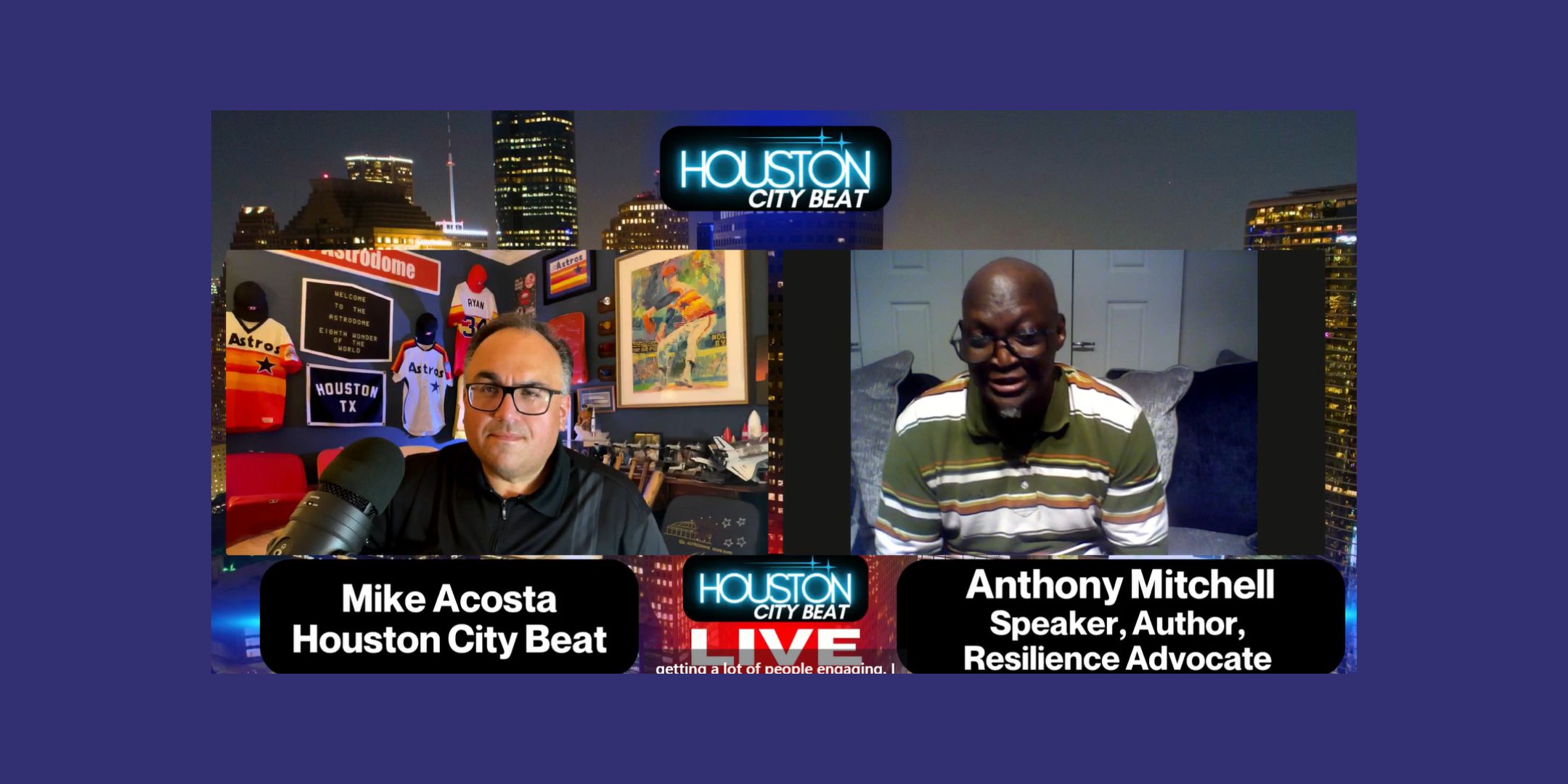
Mitchell recently joined Houston City Beat Live host Mike Acosta for a deeply personal conversation about living with an invisible condition that affects approximately one in 100,000 people.
“Pressure doesn’t disqualify you,” Mitchell said during the interview. “Pressure prepares you.”
For Mitchell, that philosophy was not built in theory. It was forged through decades of adapting to life without functioning sweat glands in the punishing heat of Texas.

Living With a Condition Few Understand
Anhidrosis affects the body’s ability to regulate temperature because sweat glands do not function properly. Mitchell explained that he has lived with the condition since birth, and that the genetic odds of inheriting it are extraordinarily rare.
Growing up in South Texas, everyday activities most children took for granted became calculated risks. Playing outside for too long, working in hot environments, or participating in sports could quickly become dangerous.
As a child, Mitchell’s mother found creative ways to help him stay cool, including wrapping wet towels around his legs and neck so he could spend more time outside with friends.
Even then, Mitchell refused to let the condition define him.
After coaches advocated on his behalf, he was eventually allowed to participate in athletics, where he excelled in track and field and even advanced to state competition in the long jump.
“That opened up a whole new world for me,” Mitchell said. “I became more active and more connected with my classmates.”
Adapting Instead of Quitting
Mitchell described many moments throughout his life where he quietly developed systems to manage his condition instead of allowing it to stop him.
One of those moments came during his first grocery store job in East Texas. Wearing a collared shirt, bow tie, and khakis while collecting shopping carts in the Texas heat presented obvious challenges.
Rather than give up, Mitchell learned to step into the store’s walk-in coolers between trips outside, carefully regulating his body temperature without drawing attention to himself.
“I knew if I prepared myself and accommodated myself, I could get through almost anything,” he said.
That mindset would become the foundation for his work as a resilience advocate.
Building Community for Rare Disease Families
Mitchell said one of the most isolating parts of growing up with anhidrosis was believing he might be the only person in the world dealing with it. That changed later in life when he discovered online communities of parents whose children shared the same condition.
Those conversations inspired Mitchell to create Rare Together, one of several apps he is developing to support people living with rare diseases and invisible conditions.
The app creates a space where families can exchange advice, share medical resources, and connect with others navigating similar challenges.
Mitchell also created No Sweat Strong, which focuses specifically on anhidrosis awareness and education, along with Global Exchange, an app designed to connect speakers and storytellers with supportive communities while traveling.
“What you’ve really done is built a beautiful community for people who really don’t have a voice,” Acosta told him during the interview.
Faith, Leadership, and Purpose
In addition to his advocacy work, Mitchell has authored multiple books, including Living Without Sweat Glands, Leadership Under Pressure, and Crush College Without the Stress.
His podcast, Living Beyond the Label, recently surpassed 100 episodes and focuses on leadership, faith, perseverance, and overcoming adversity.
Throughout the interview, Mitchell repeatedly returned to the idea that adversity can either consume people or prepare them.
For him, the greatest victory is not simply surviving a rare condition. It is using that experience to help others feel less alone.
“I just want to get the story out there as much as I can,” Mitchell said.
And after hearing his story, it becomes clear that Anthony Mitchell is doing far more than sharing a diagnosis.
He is building a lifeline.