

Sherrie James was getting ready for a trip to Dollar Tree with her daughter when she heard two loud booms. Kiki was already downstairs, waiting for her. Upstairs, something had torn through the roof and into Kiki’s bedroom.
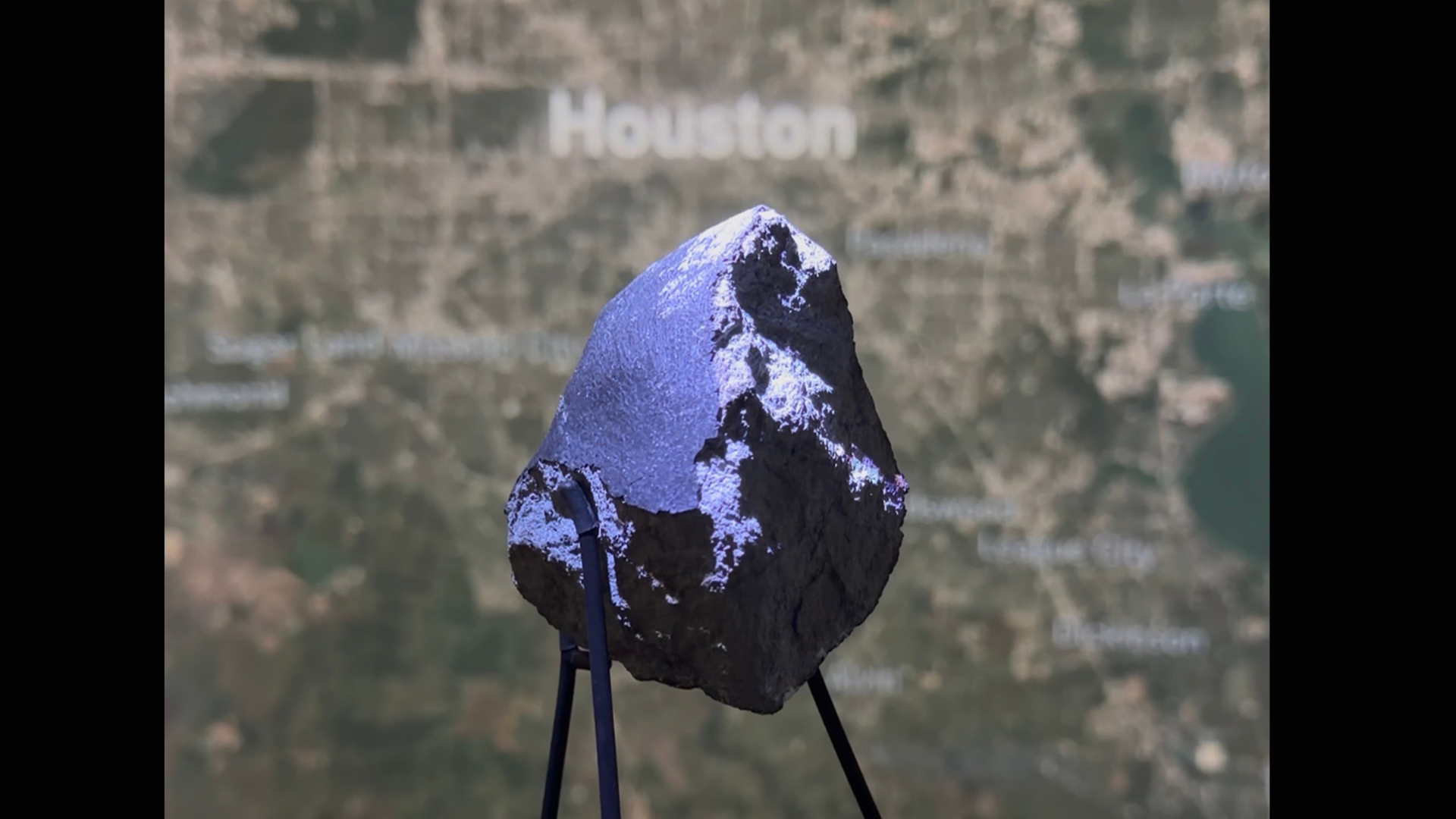
What the family discovered would eventually become the centerpiece of a Houston museum exhibition: a meteorite approximately 4.5 billion years old.
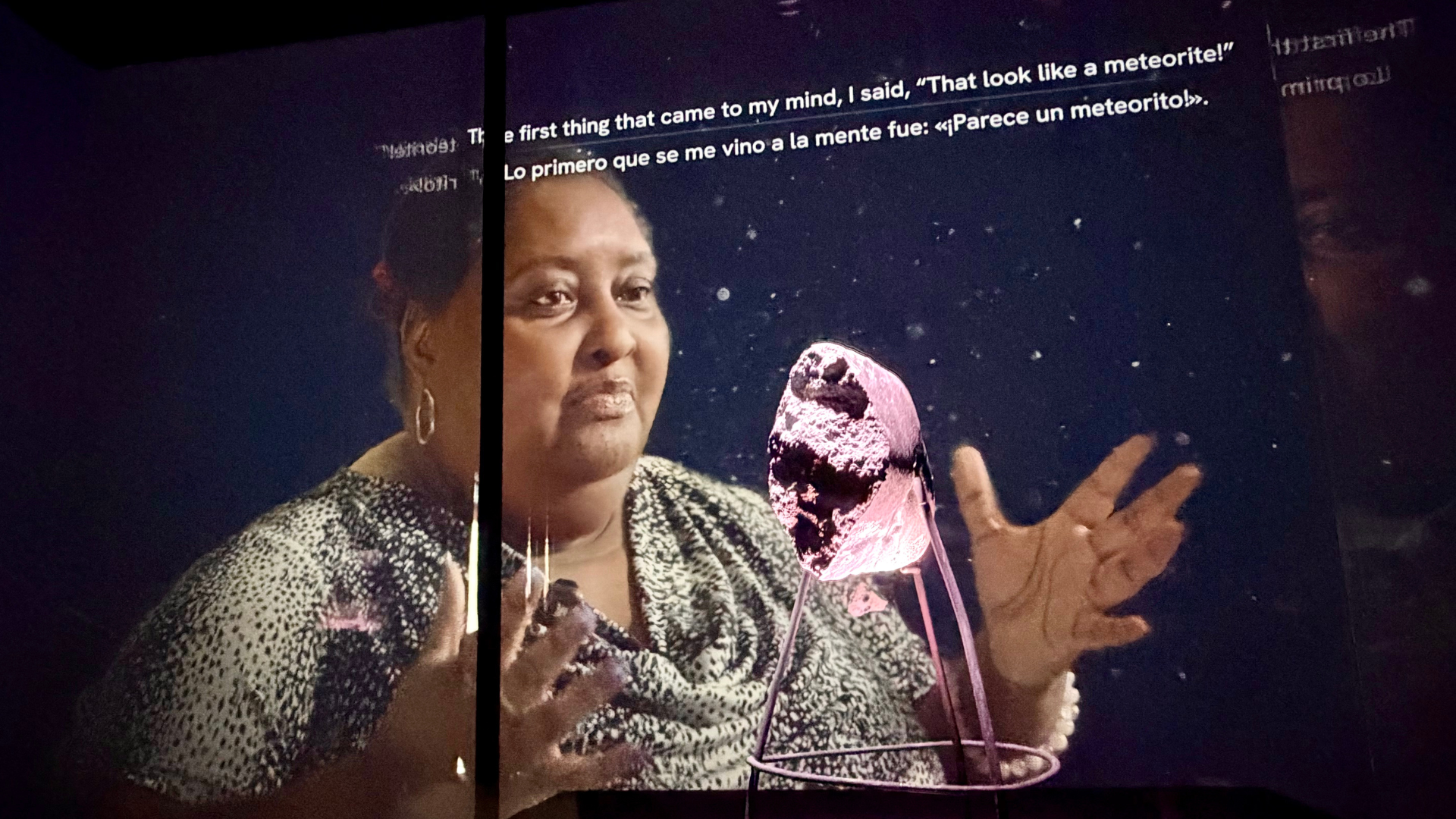
Houston City Beat visited the Houston Museum of Natural Science to meet Sherrie, her daughter Kiki and her grandson Trae, and hear the family’s story behind Fall to Earth. The free exhibition opened November 6, giving visitors a close look at the space rock that struck their Spring-area home on March 21, 2026.
Watch the story
A hole in the ceiling
At first, Sherrie thought something ordinary had fallen. Perhaps a mirror had come down. Then Trae returned with news of a hole in the ceiling.
When Sherrie entered Kiki’s room, she noticed damage to the floor and near the bed before spotting the rock itself. Its dark exterior and gray section caught her attention.
“Baby, that looks like a meteorite,” she recalled saying to Trae.
Sherrie and Trae both remembered the uncertainty of those first moments. The family left the room, closed the door and waited for help. Sherrie said she called the police department, and police and firefighters responded.
As the possibility of a meteorite became clearer, so did the realization of how close it had come to where Kiki usually spent time.
Kiki had been downstairs when it happened.
“I’m just very grateful that she was not in there,” Sherrie said.
The errand they had been preparing for became an unexpected part of the story: a routine trip to the store meant Kiki was away from her bedroom when the rock arrived.
Kiki and Trae remember
Asked how it felt to know a meteorite had come through the roof and landed near her bed, Kiki answered simply.
“Scary and surprisingly shocking.”
Her room has since been put back together, she told Houston City Beat. And while she had heard people describe the experience as a blessing, she had her own suggestion: the front yard would have been a better landing spot.
For Trae, the discovery brought fear at first, followed by a stronger desire to learn. He recalled recognizing the unusual object as a possible meteorite while finding the idea difficult to believe.
The experience strengthened his interest in science and made him want to become a scientist even more, he said.
“It’s like a blessing, to be honest.”
From the freezer to a museum display
Before visitors could see the meteorite at HMNS, Sherrie had to decide what to do with it at home. She said she eventually kept it in her freezer after receiving advice about storing it, and it remained there until the museum collected it.
Now, seeing it presented in an exhibition has given her another reason to be excited about sharing the family’s experience.
“I feel blessed. I really do,” she said.
Sherrie expressed gratitude that the museum is displaying the meteorite and giving others a chance to hear what happened.
“It’s not very big, but, you know, it made a big impact.”
The science behind the boom
NASA’s account of the March 21 event places the fireball over the Houston area at about 4:40 p.m. The incoming object traveled southeast at approximately 35,000 mph before breaking apart about 29 miles above Bammel, west of Cypress Station. The breakup produced a pressure wave that caused the booms heard in the area.
A surviving piece of space rock that reaches the ground is called a meteorite. Fall to Earth brings that science close to home through the actual object that landed in the family’s bedroom.
For Sherrie, Kiki and Trae, it also preserves a day they remember in different ways: a frightening surprise, relief that Kiki was downstairs, and a new connection to the science of outer space.

Visit Fall to Earth
Fall to Earth is located in the Museum Store at the Houston Museum of Natural Science, 5555 Hermann Park Drive, Houston, TX 77030.
The exhibition is free and open to the public. Check the official exhibition page for current information before visiting.
