
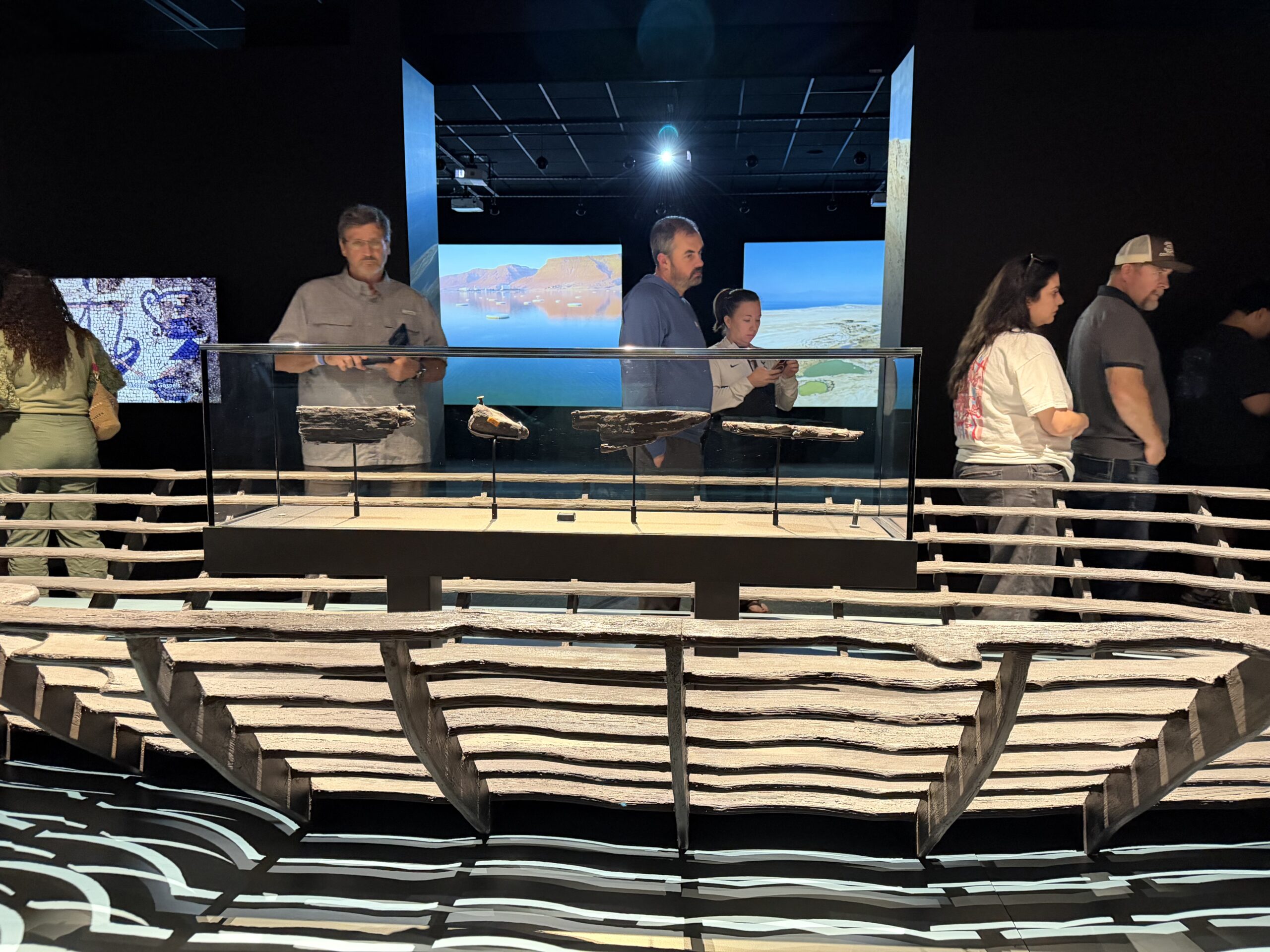
Two thousand years after the words were written, infrared images reveal traces of ink that are nearly impossible to see on the original fragments.
Look first at the fragment itself. Then look at the infrared image. What seems like a dark patch on an ancient piece of parchment can resolve into letters. Someone wrote those letters by hand about 2,000 years ago. Now you can stand in front of the original at the Houston Museum of Natural Science and see how researchers are learning to read it.
Dead Sea Scrolls: The Exhibition brings original manuscripts and artifacts from the ancient world to the museum’s third floor. HMNS hosted a Dead Sea Scrolls exhibition in 2004. Now, more than two decades later, anyone in Houston can see the fragments up close. Whether you’ve loved history for years or never thought of yourself as a history person, there’s something about standing in front of handwriting from 2,000 years ago that makes you want to know more.
Houston City Beat
Inside the Dead Sea Scrolls exhibit
A jar, a cave and a discovery
In 1947, a young Bedouin shepherd found the first scrolls in a cave near Qumran, close to the Dead Sea. More discoveries followed. The surviving fragments include some of the oldest known copies of texts from the Hebrew Bible, along with prayers, commentaries and writings that shed light on Jewish life during the Second Temple period. The dark, dry caves helped preserve materials that ordinarily deteriorate over time. Read about the discovery.
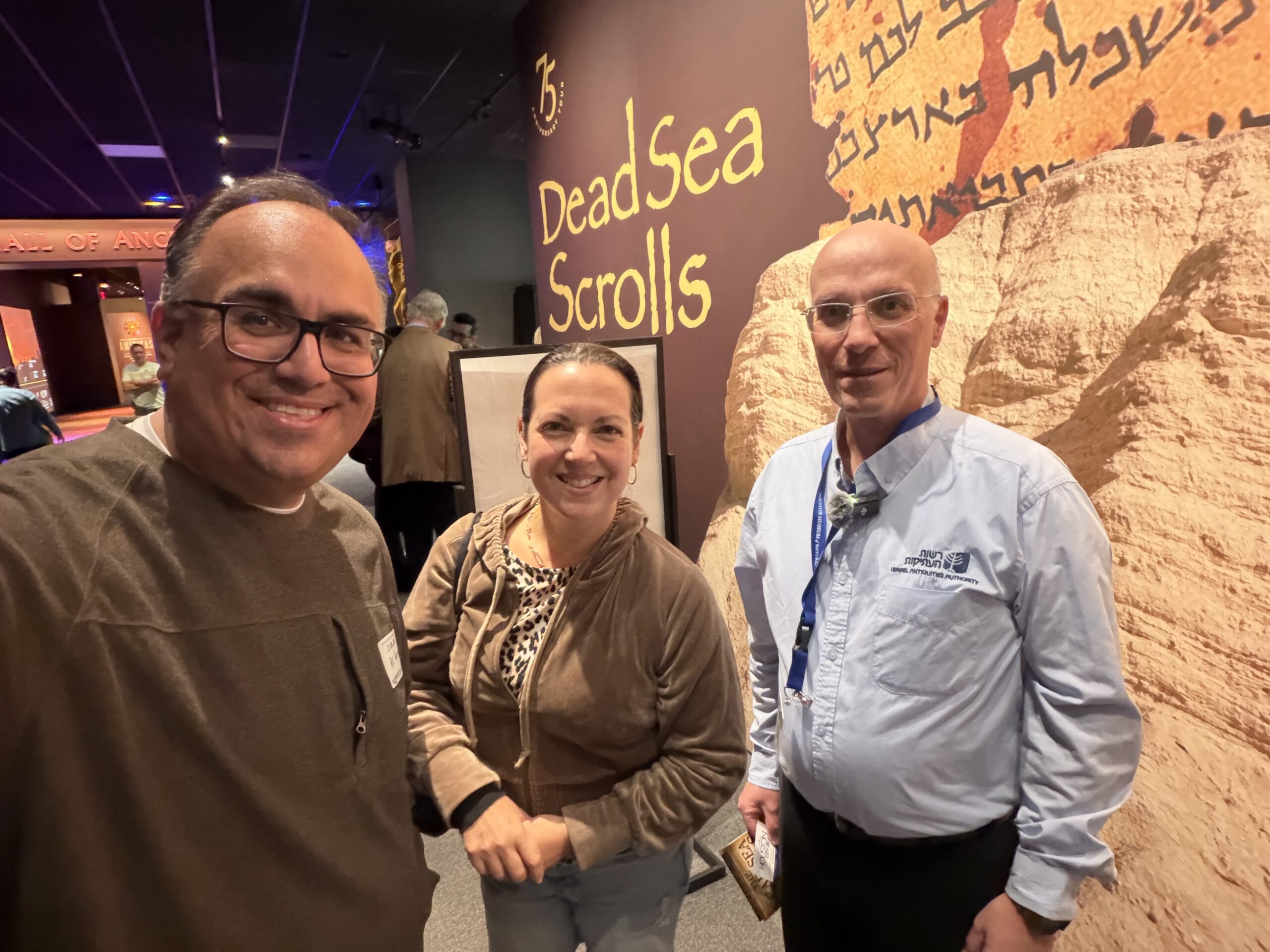
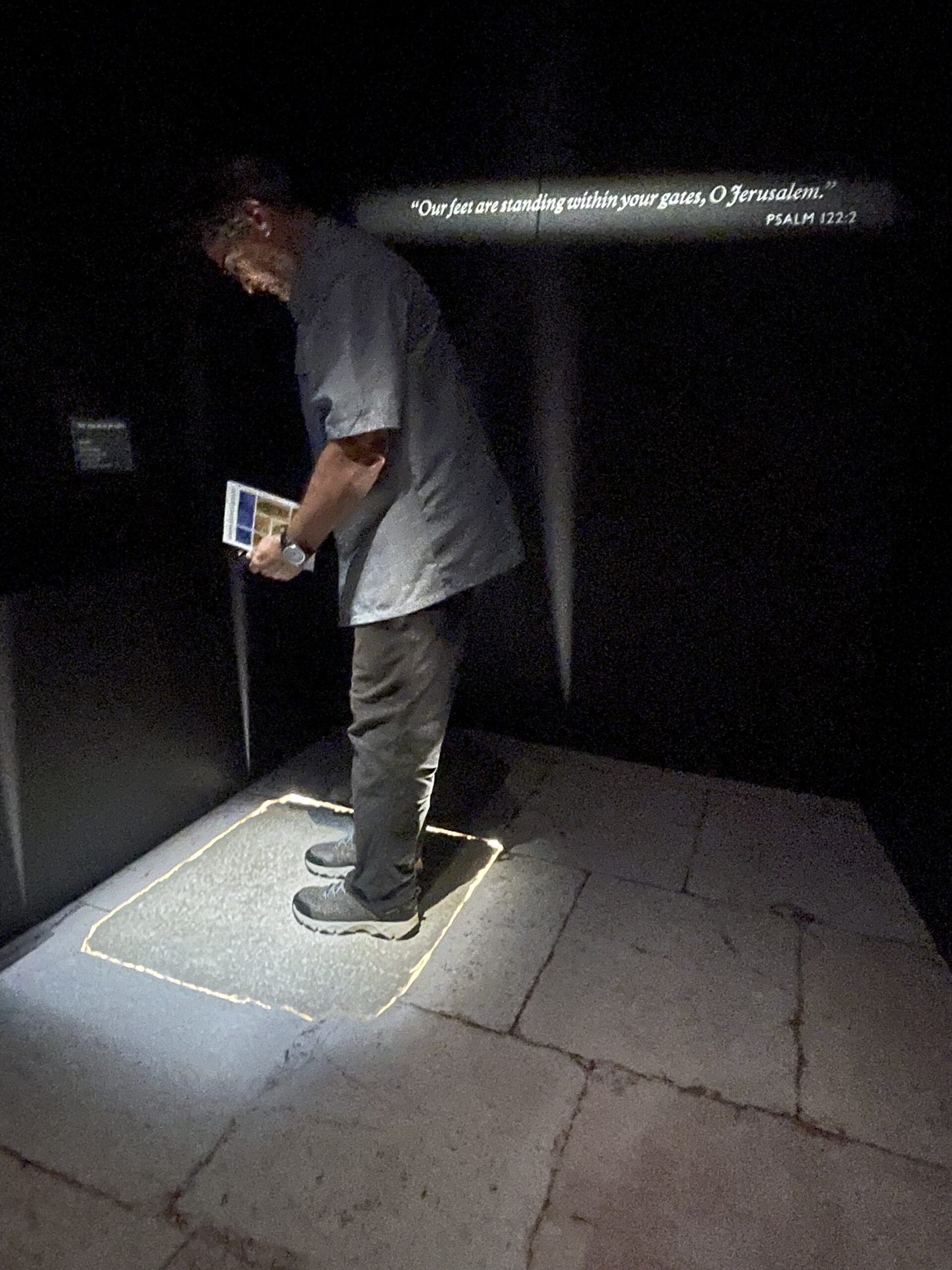
In our interview, Dr. Elie Haddad of the Israel Antiquities Authority drew our attention to the objects around the scrolls: cooking pots, pottery and metal objects that help you picture the people who lived when the manuscripts were written. One display tells the story of a vessel carved from a single piece of limestone that may have held water for worshippers in ancient Jerusalem. Chris Giordano, a producer with Running Subway Productions, pointed out a detail worth looking for: visitors can stand on a stone from an excavated pilgrimage road that once led people toward the Temple.
The tape that had to come off
Haddad described how early researchers pieced the fragments together like a puzzle and used adhesive tape to hold pieces in place. Over time, the adhesive seeped into the parchment and damaged the ink. Conservators had to painstakingly remove it. Haddad said the team now keeps the fragments at a controlled temperature and humidity modeled on the conditions in the caves where they survived for centuries. Read about the conservation work.
There’s a gallery devoted to that work and to the science of reading the scrolls, Giordano told us. Researchers photograph the fragments at different wavelengths, including near-infrared, to bring out traces of ink that have faded from view. The images let scholars study the writing without repeatedly handling the originals. See how the imaging works.
Co-curator Risa Levitt told Houston City Beat that part of bringing the exhibition to different cities is showing people “how we piece together the past without all the pieces.” That’s a good reason to go in person. The enlarged image helps you make out the writing. The original lets you see how little survived, and how much researchers have learned from it.
The rest of the museum puts those 2,000 years in perspective. At the free Fall to Earth exhibit, you can see the 4.5-billion-year-old meteorite that crashed through a Spring family’s roof. In the Morian Hall of Paleontology, you can stand beneath the skeleton of a T. rex named Wyrex. Then, in the Hall of Ancient Egypt, jewelry, tools and decorated coffins tell a more human story: how people lived and what they believed came after death.
After seeing a rock as old as the solar system and a dinosaur that towers over you, it’s striking how much can draw you in on a small piece of parchment: a few letters someone wrote by hand 2,000 years ago.
Plan your visit: The Houston Museum of Natural Science is at 5555 Hermann Park Drive, Houston, TX 77030. The exhibition is scheduled to run through September 2027. Check HMNS for current hours and timed tickets.
