
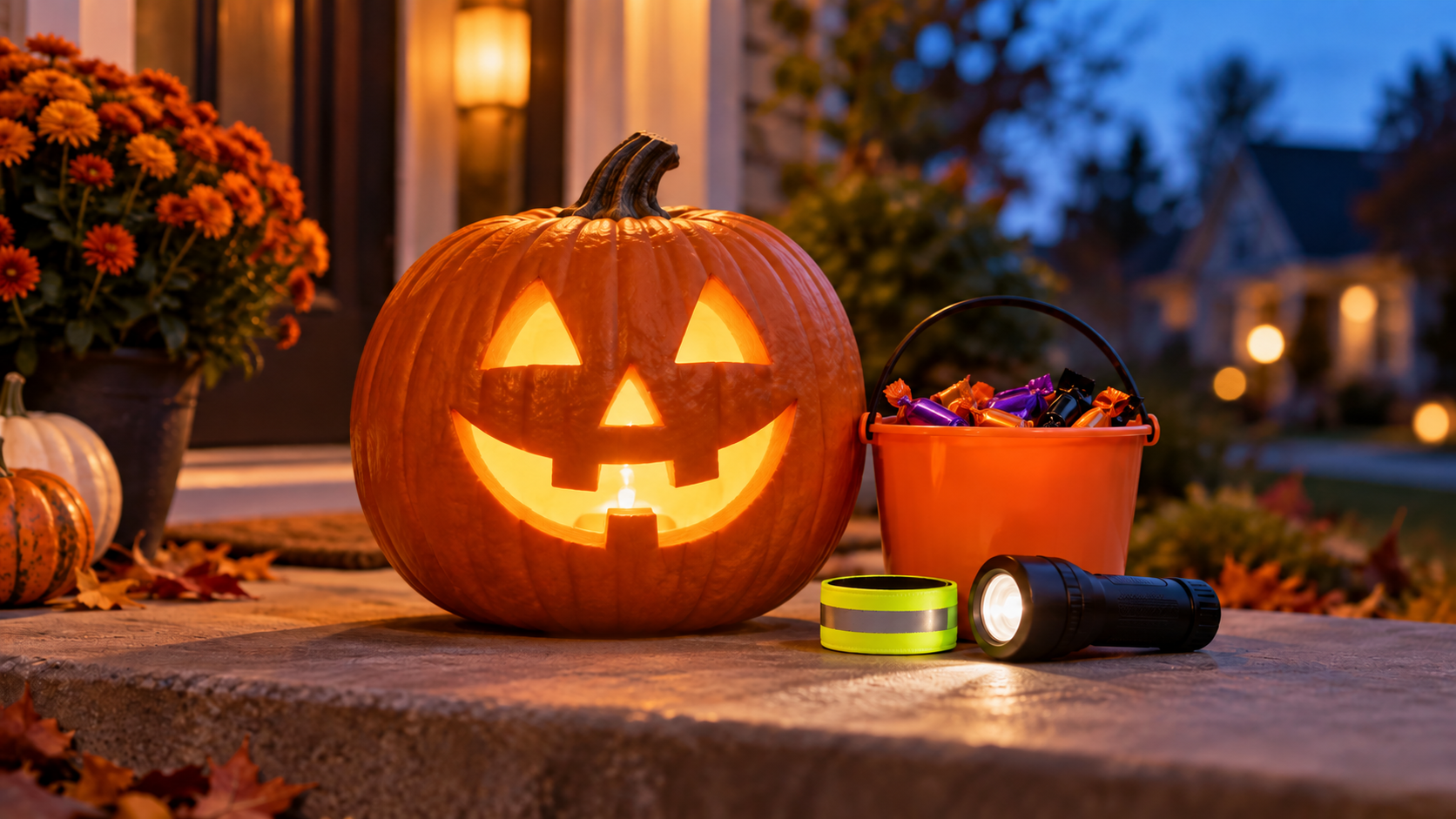
From trick-or-treating and costumes to candy allergies and pedestrian safety, a little preparation can make a big difference this Halloween.
Halloween is almost here, and with October 31 falling on a Saturday this year, families across Greater Houston are getting ready for an evening of costumes, candy, and neighborhood fun.
But while children are thinking about filling their candy bags, parents have a few other things to consider.
Houston City Beat’s Lisbet Newton recently joined Dr. Hiren Patel, chief medical officer for UnitedHealthcare in Texas, for a virtual studio conversation about some of the most common Halloween injuries and what families can do to prevent them.
Their conversation covered everything from pedestrian accidents and costume safety to allergic reactions, choking hazards, and even the familiar question of whether too much Halloween candy really makes children hyperactive.
Keeping Children Safe on Houston Streets
One of the biggest concerns surrounding Halloween is pedestrian safety, particularly as neighborhoods fill with trick-or-treaters after dark.
During the conversation, Newton pointed to Texas pedestrian safety figures from October 2024, when 89 pedestrians were killed and 143 were seriously injured statewide.
Those numbers serve as a sobering reminder of the importance of paying attention, especially on a night when children may be excited, distracted, and moving between houses.
Dr. Patel explained that children sometimes run into streets without checking for traffic or dart between parked vehicles, where approaching drivers may have difficulty seeing them.
He encouraged families to make visibility a priority.
Flashlights, reflective materials, glow sticks, and brightly colored costumes can all help make children more noticeable after sunset.
Adult supervision is also important, along with using sidewalks and designated crossing areas whenever possible.
For Houston drivers, the message is just as important: slow down, stay alert, and expect children to be present in residential neighborhoods.
Choosing a Costume That’s Fun and Safe
Halloween costumes have come a long way from the plastic masks many adults remember wearing as children.
But even today’s elaborate costumes can introduce unnecessary risks.
Dr. Patel recommends choosing costumes that fit properly and do not drag along the ground, which can cause children to trip.
Masks that obstruct vision are another concern. Face paint may be a better option, provided parents first test a small area of skin to check for a possible reaction.
He also recommends soft, flexible costume accessories and flame-resistant materials whenever possible.
And while a dark costume might look impressive, adding reflective tape or carrying a glow stick can make a meaningful difference when children are walking through neighborhoods after dark.
When Halloween Candy Causes an Allergic Reaction
For families managing food allergies, Halloween requires some additional preparation.
Dr. Patel explained that peanuts and other ingredients commonly found in candy and chocolate can cause allergic reactions, sometimes in children who have never experienced one before.
Some of the warning signs he discussed include swelling of the lips, tongue, or throat, difficulty breathing, hives, and fainting.
These symptoms can signal a serious allergic reaction requiring immediate medical attention.
Dr. Patel emphasized that parents should call 911 immediately when a child experiences severe symptoms, particularly breathing difficulties or swelling of the throat.
Families with known food allergies should have their prescribed epinephrine available and follow their established allergy emergency action plans.
He also encouraged parents to carefully read candy labels rather than assume a familiar-looking treat is safe.
Don’t Overlook Choking Hazards
Food allergies aren’t the only concern when children begin enjoying their Halloween candy.
Choking can happen when a child places too much candy in their mouth or attempts to swallow pieces that are difficult to chew.
Dr. Patel encouraged parents and supervising adults to pay attention to how children eat their treats rather than allowing them to consume large amounts of candy at once.
He also stressed the importance of emergency response training and calling 911 when a choking emergency occurs.
For parents, this is another reason to supervise younger trick-or-treaters and take a few moments to look through their candy before allowing them to dig in.
Does Sugar Really Make Kids Hyperactive?
It’s a question many parents have asked after watching their children return from trick-or-treating full of excitement.
Does all that sugar really cause children to bounce off the walls?
According to Dr. Patel, research has not established that sugar itself causes the hyperactivity often associated with Halloween.
Instead, the excitement of costumes, friends, trick-or-treating, and an evening filled with stimulation may explain much of that extra energy.
Rather than focusing entirely on a supposed sugar rush, Dr. Patel recommends taking a balanced approach.
Children should enjoy a proper meal before heading out, stay hydrated, and have reasonable limits on how much candy they consume.
He also reminded parents not to forget dental hygiene, particularly brushing teeth before bedtime.
Halloween candy can be part of the fun without becoming an all-day eating event.
A Little Preparation Goes a Long Way
As the conversation came to a close, Dr. Patel returned to a simple message: many common Halloween injuries can be prevented with planning and awareness.
Parents can prepare by choosing appropriate costumes, checking candy ingredients, supervising young children, and making sure everyone understands basic street safety.
And while Halloween is especially exciting for children, the responsibility for keeping neighborhoods safe belongs to everyone, including motorists.
With October 31 falling on a Saturday, families may have a little more flexibility to prepare for the evening rather than rushing home from school and work to get everyone ready.
That extra preparation could make all the difference.
Houston City Beat thanks Dr. Hiren Patel of UnitedHealthcare for sharing these important reminders with our community.
Here’s to a fun, memorable, and safe Halloween for families throughout Greater Houston.
At Houston City Beat, We Care About HOU.
We are the Storytellers of HOU.
